

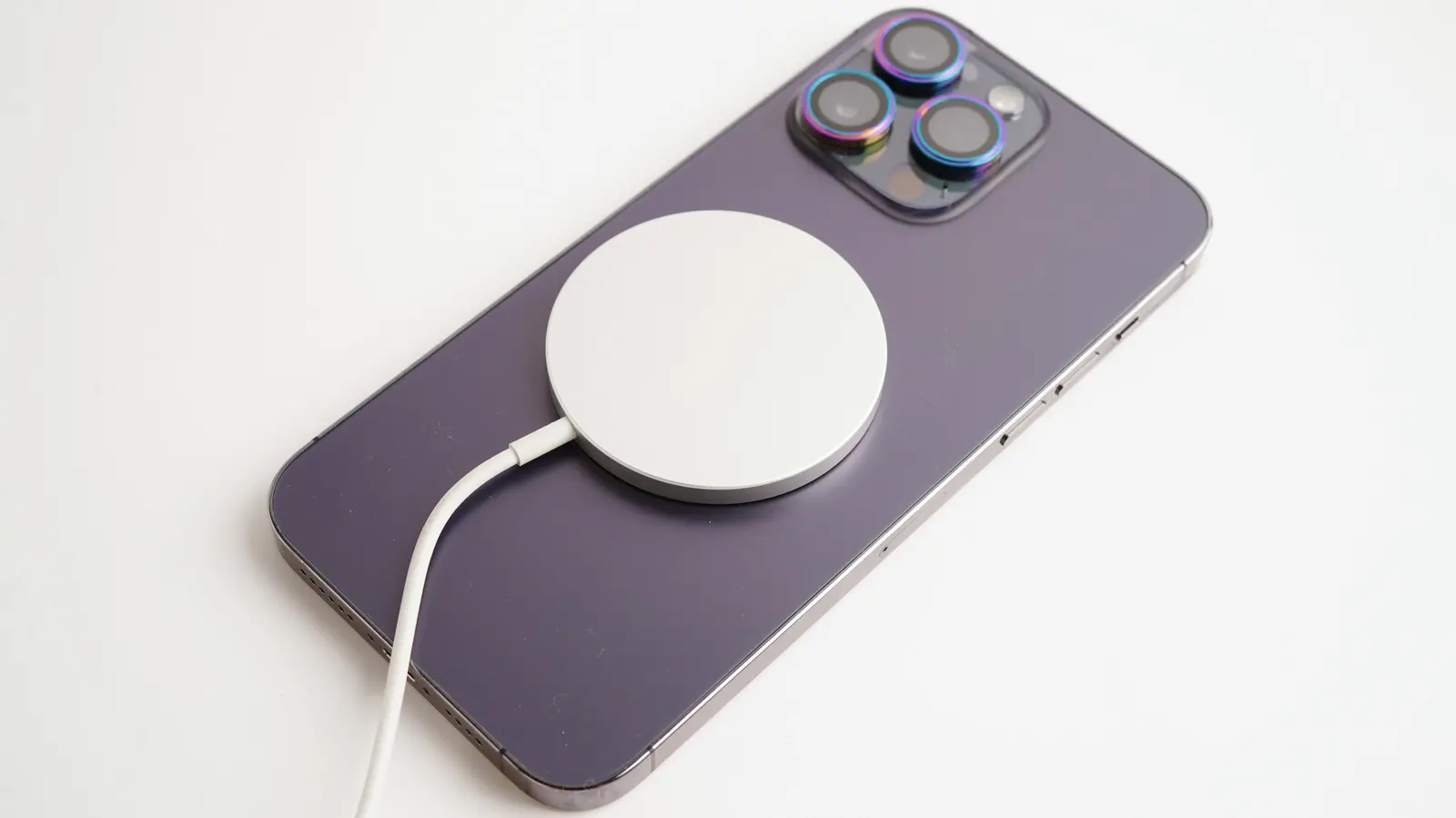
Wireless charging has become a standard feature in modern smartphones, with tech giants like Apple, Samsung, and Google integrating it into their flagship devices. The appeal is clear: a simple drop of the phone onto a pad eliminates the need for fumbling with cables. However, this convenience comes at a cost—literally and environmentally. Studies consistently show that wireless charging consumes significantly more electricity than traditional wired charging, often wasting 30% to 50% more energy. This article delves into the technical reasons behind this inefficiency, the global impact, and the ongoing efforts to make wireless power transfer greener.
The Physics of Inefficiency
Wireless chargers operate on the principle of electromagnetic induction. A coil in the charging pad generates an alternating magnetic field, which induces an electrical current in a corresponding coil inside the device. This current is then rectified and used to charge the battery. While elegant, this process introduces several lossy steps. First, the conversion of alternating current (AC) from the wall outlet to direct current (DC) in the charger already loses about 5% to 10% of energy. Then, the magnetic field must cross an air gap—typically several millimeters—before reaching the device's coil. This air gap causes significant energy dissipation in the form of heat. In contrast, a wired connection transfers electricity through copper wire with minimal resistance, achieving efficiencies above 95%.
According to a 2020 study by OneZero, charging a smartphone from 0% to 100% using a cable requires about 15 watt-hours (Wh). The same charge via a wireless pad consumes roughly 21 Wh—a 40% increase. A 2024 test by iFixit using Apple's MagSafe charger showed a slightly better but still substantial gap of 36% more energy. The inefficiency can worsen dramatically if the device is not perfectly aligned with the charging coil. Misalignment can reduce efficiency by half, as the magnetic coupling weakens. Many users simply place their phones carelessly on the pad, unknowingly wasting even more power.
Global Accumulation of Waste
Individually, an extra 6 Wh per day may seem trivial. But scaled across the billions of devices in use, the numbers become staggering. According to the Wireless Power Consortium and Deloitte, 30% to 66% of smartphone owners use wireless charging at home. With roughly 7.6 billion smartphones globally, if just 30% charge wirelessly, the annual power waste amounts to 4,830 gigawatt-hours (GWh). That's enough electricity to power over 400,000 average American homes for a year. As wireless charging becomes more popular, this figure will only rise.
The environmental impact extends beyond wasted electricity. The extra generation of power, especially from fossil fuels, contributes to carbon emissions. Moreover, the heat generated by inefficient charging degrades lithium-ion batteries faster than wired charging. A degraded battery may need replacement sooner, leading to more electronic waste. Some users might even replace their entire phone earlier than necessary, adding to the growing e-waste crisis. The whole lifecycle—from manufacturing to disposal—carries hidden environmental costs that are often overlooked in the convenience narrative.
Heat: The Silent Battery Killer
Wireless chargers generate significant heat during operation. This heat is a direct sign of energy being wasted—electricity that does not reach the battery is dissipated as thermal energy. High temperatures accelerate chemical reactions inside lithium-ion batteries, promoting the breakdown of electrolytes and the growth of solid-electrolyte interphase layers. Over time, this reduces the battery's capacity and overall lifespan. Modern smartphones include thermal management systems that throttle charging speed when the battery temperature exceeds 45°C (113°F). While this prevents immediate damage, it extends charging time and still contributes to cumulative wear.
To mitigate heat, manufacturers have introduced features like active cooling fans in some charging pads (e.g., certain third-party MagSafe chargers) and improved coil designs that reduce resistance. However, these add complexity and cost. Consumers are often unaware that charging their phone wirelessly on a soft surface like a bed or a couch can trap heat, making the problem worse. The device may overheat, slowing the charge or even stopping entirely, which defeats the purpose of convenience.
Safety and Health Concerns
Beyond efficiency, wireless charging poses safety risks if not implemented correctly. Cheap, unbranded chargers often lack critical safety features such as temperature sensors, foreign object detection, and overcurrent protection. If a metal object—like a coin or key—is placed between the phone and the pad, the magnetic field can induce eddy currents in the metal, causing it to heat up rapidly and potentially start a fire. Reputable chargers from Apple, Samsung, and Anker include mechanisms to detect foreign objects and shut down, but knock-off products sold on online marketplaces may cut corners.
Additionally, the magnetic fields generated by some high-power wireless chargers can interfere with medical implants like pacemakers and defibrillators. The strong alternating magnetic field can trigger a pacemaker's "magnet mode," altering the pacing rate or disabling therapy. While Qi-standard chargers typically operate at frequencies and power levels that are considered safe when used as directed, the user must keep the implant at least several inches away from the pad. This is not always possible when charging phones on nightstands or desks.
Comparing Wireless to Wired: A Nuanced View
Wired charging is not without its drawbacks. Cables wear out over time, requiring replacement. The connectors—whether Lightning, USB-C, or micro-USB—can become loose or damaged after repeated insertions. Ports on devices can accumulate lint and fail, especially in dusty environments. Moreover, the proliferation of proprietary fast-charging standards (Qualcomm Quick Charge, USB Power Delivery, Samsung Adaptive Charging, Apple's 20W+ chargers) means that using the wrong cable or adapter can result in slower charging or compatibility issues. The convenience of wireless charging eliminates these physical wear points and the hassle of cable management.
Wireless charging also enables design freedom. Devices can be made more water-resistant and dust-tight since they lack an exposed charging port. This has driven the trend toward portless phones, with companies like Apple rumored to be working on a fully portless iPhone. In such a future, wireless charging would be the only option, making efficiency improvements even more critical.
Technological Advances and Future Prospects
The wireless charging industry has recognized the efficiency problem and is actively working on solutions. The introduction of MagSafe on iPhones and the Qi2 standard, which uses magnetic alignment to ensure proper coil positioning, has already improved efficiency by reducing misalignment losses. Qi2 chargers should achieve efficiencies closer to 80% or 85%, compared to early Qi chargers that could drop below 60% when misaligned. However, even at 85% efficiency, wireless charging still wastes 15% of energy, while wired charging typically wastes only 5% or less.
Other emerging technologies include resonant inductive coupling, which allows charging over a greater distance (up to several centimeters) and with multiple devices simultaneously. Although resonant charging is inherently less efficient than tight coupling, it offers flexibility for applications like charging smart home sensors or electric toothbrushes. Long-range wireless power transmission using radio frequency (RF) beams is also under development, but its efficiency is currently very low—often below 10%—limiting its use to very low-power devices.
Battery technology itself is evolving. Solid-state batteries, which are less sensitive to heat, could mitigate some of the degradation caused by wireless charging. However, mass production of solid-state batteries is still several years away. In the meantime, users can minimize waste by using wireless chargers wisely: align the device properly, remove thick cases, charge in cool environments, and avoid leaving the phone on the pad after it reaches 100% (since trickle charging also wastes energy).
Environmental and Economic Considerations
The extra electricity consumed by wireless charging has a direct economic impact on consumers. Over a year, charging a phone with a cable costs roughly $0.66 in electricity (assuming $0.12 per kWh), while wireless charging costs about $0.91. This minor annual difference is unlikely to sway consumer choice, but for businesses with hundreds of devices—such as hotels, airports, and offices that install wireless charging stations—the cumulative cost can be significant. Moreover, the environmental cost in terms of carbon emissions depends on the energy mix of the local grid. In regions heavily reliant on coal, the extra 1.5 kg of CO2 per phone per year adds up quickly.
Efforts to regulate the efficiency of wireless chargers are gaining traction. The European Union's Ecodesign Directive, which already mandates energy efficiency standards for many electronic products, may eventually include wireless chargers. Similarly, the U.S. Environmental Protection Agency's Energy Star program could introduce certification requirements for wireless charging pads, encouraging manufacturers to prioritize efficiency. Consumer awareness also plays a role; as more people understand the trade-offs, they may demand more efficient products or choose wired charging when energy conservation is a priority.
Practical Tips for Users
For those who prefer wireless charging for its convenience, there are ways to reduce energy waste. First, always use a certified charger from a reputable brand. Look for Qi certification labels that indicate compliance with wireless power consortium standards. Second, remove thick cases or use MagSafe-compatible cases that have built-in magnets for proper alignment. Third, charge on a hard, flat surface to allow heat to dissipate. Fourth, avoid placing any metal objects—like keys, coins, or cards—on the charger pad. Finally, turn off the charger when not in use; many pads continue to draw standby power even when no device is placed on them.
Alternatively, users can adopt a hybrid approach: use wireless charging for overnight top-ups when speed is not important, and use wired fast charging when a quick boost is needed. This balances convenience with efficiency. Some smartphones now offer settings to limit the battery charge to 80% to extend battery life, which can also reduce the amount of energy wasted during the last 20% of charging (when heat generation tends to be higher).
The Road to Standardization and Interoperability
The introduction of Qi2 as a universal magnetic standard for wireless charging promises to improve efficiency across the board. Companies like Apple, Samsung, and Google have adopted or are about to adopt Qi2, which uses a magnetic ring to ensure perfect coil alignment. This should reduce the efficiency gap between wireless and wired charging to around 20% or less. However, even that gap is still significant when scaled globally. Further improvements could come from using higher quality coils, better ferrite materials, and more efficient power electronics.
Another avenue is the integration of wireless charging into furniture and vehicles. Tesla and other electric vehicle manufacturers offer wireless charging pads that can charge multiple devices simultaneously. While automotive wireless chargers often have lower power output (5-15W) to keep heat manageable, newer standards like Qi 1.3 and beyond support up to 15W for phones and even 30W for tablets. Faster wireless charging tends to be less efficient due to higher current and more heat, so there is a trade-off between speed and efficiency.
Finally, the future of wireless charging may include ultra-wideband (UWB) technology for precise positioning, allowing chargers to dynamically adjust power transfer and improve efficiency. For example, a pad could detect the exact position of a device and optimize the magnetic field to reduce losses. Early research shows that such adaptive systems could achieve efficiencies above 90%, rivaling wired chargers. However, these technologies are not yet commercialized and may require more expensive hardware.
In summary, wireless charging is remarkably convenient but inherently less efficient than wired charging due to the physics of electromagnetic induction and inevitable heat losses. The global power waste is substantial, and the heat generated can shorten battery life and pose safety risks. However, ongoing standards and technology improvements are narrowing the gap. Users can minimize waste by choosing certified products, using proper alignment, and being mindful of charging conditions. As manufacturers continue to innovate, the day when wireless charging is as efficient as wired may not be far off—but for now, the cable remains the greener choice.
Source: Engadget News