

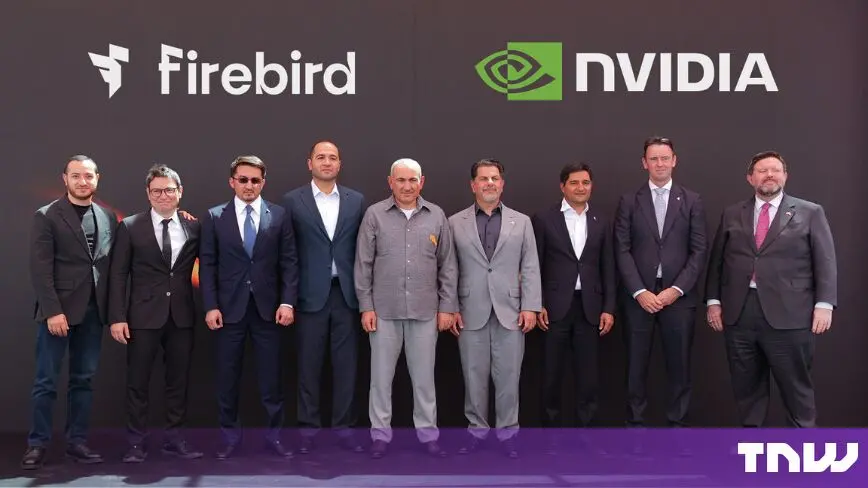
On a Saturday in Hrazdan, Armenia, a ribbon-cutting ceremony brought together an unlikely group: Armenian Prime Minister Nikol Pashinyan, Kazakhstan's deputy prime minister Zhaslan Madiyev, and David Allen, the US chargé d'affaires in Armenia. The occasion was the opening of what NVIDIA describes as the CIS region's largest AI factory. The facility, built by Firebird, a US-based AI cloud company, is more than a data centre. It is a physical expression of a US export licence, and its guest list is the real story.
A US company opened a facility in a country inside Russia's traditional sphere of influence, with an American diplomat and a Kazakh minister standing by. That scene would have been almost unthinkable a few years ago. Now it is a key milestone in the shifting geography of compute infrastructure, where supercomputing power is becoming a strategic asset as valuable as oil or rare earths.
The licence is the load-bearing fact
None of this happens without export approval. Firebird secured a US export licence in November 2025, the regulatory step that allowed advanced NVIDIA hardware into Armenia at all. That licence is the foundation upon which the entire project rests. It marks a major policy decision by Washington to permit cutting-edge AI chips into a South Caucasus nation with deep historical ties to Russia.
The politics were made explicit in February. Firebird and the US government jointly announced Phase 2 at a Yerevan press conference during Vice President JD Vance's visit. That announcement scaled the project to $4 billion and roughly 50,000 GPUs, with licensing for a further 41,000 NVIDIA GB300 units. Phase One was $500 million. The announcement boldly claimed that Armenia would host one of the world's five largest AI GPU clusters. The trip by Vance underscored the strategic nature of the deal: AI infrastructure is now a diplomatic tool, and Washington is willing to place it in regions where its geopolitical influence has historically been limited.
What is actually running
The opened flagship facility, designated DC-1, is specified at 6,144 NVIDIA B200 GPUs across 15 megawatts. It is liquid-cooled and built on NVIDIA's reference architecture, which provides a proven blueprint for efficiency and reliability. The target is more than 70,000 Rubin and Blackwell GPUs and 300 megawatts by the end of 2027. That is a twentyfold increase in power capacity in roughly 17 months, a scaling pace that is genuinely notable even by the standards of the AI infrastructure boom.
A planned DC-2 is listed at 75,000 VR200 GPUs across 125 megawatts, with a third site at a similar scale. The delivery speed is striking. NVIDIA says the site went from plan to operating capacity in just over six months. Schneider Electric supplied switchgear, three-phase UPS systems and rack enclosures, while Vertiv provided chilled-water cooling systems. Those companies are increasingly central to the AI economy, as the bottleneck shifts from chip supply to power and cooling.
The power trick
The facility runs on NVIDIA's DSX platform, which codesigns compute, networking, power and cooling as a single integrated system rather than separate procurements. NVIDIA claims this approach allows up to 40% more GPUs on the same footprint by recovering stranded power. In traditional data centres, power is often wasted because compute, cooling and electrical systems are not optimized together. DSX is designed to eliminate that waste.
For a site scaling from 15 to 300 megawatts, that coordination is where the capacity maths gets made. It is also, in NVIDIA's own framing, a tokens-per-dollar argument rather than a pure performance one. The goal is to maximize the output of AI models per dollar spent, which means squeezing every possible watt into useful computation. This is particularly important in a region where grid infrastructure may not be as robust as in established data centre markets like Virginia or Texas.
Who is paying for it
Firebird said NVIDIA intends to invest in the company, following an earlier CoreWeave investment this year. The pattern is familiar: NVIDIA takes a position in a company that then buys NVIDIA hardware at scale. This creates a powerful financial flywheel. Firebird raises capital, NVIDIA invests, and then Firebird spends that capital on NVIDIA GPUs. It is a model that has transformed the AI industry over the past few years.
NVIDIA has now committed more than $40 billion to AI equity positions in 2026, and the structures have grown more creative. It took a $2.1 billion warrant in IREN as part of a five-gigawatt data centre deal. The same logic runs through its sovereign deals. NVIDIA invested $1 billion in Naver while striking a $500 billion arrangement with SK Group, an approach critics have labelled circular financing. These critics argue that NVIDIA is essentially creating its own demand by investing in customers who then buy its products. But the company counters that this is a natural way to accelerate the deployment of AI infrastructure in markets that need it most.
The neocloud playbook
Firebird fits a category that barely existed three years ago: companies that buy GPUs at scale and rent them to model builders. These so-called neoclouds have become the fastest-growing segment of the AI cloud market. CoreWeave, an early Firebird backer, has signed a multi-year deal with Anthropic to run Claude at production scale. That deal transformed CoreWeave into one of the largest AI infrastructure providers in the world.
Europe has its own version. Nscale committed €695 million to Portugal with Microsoft, reaching a $14.6 billion valuation in two years, on much the same thesis about sovereign capacity. The idea is that countries and regions want their own AI compute resources, either for national security reasons, data sovereignty, or economic development. Neoclouds sell not just raw computing power, but the ability to deploy it in a specific location with specific regulatory guarantees.
Firebird's first named customer is Perplexity, which is using the site for its answer engine and AI agent platform. That is a meaningful validation, but it is only one customer. The economics of a 300MW data centre require a large and diverse customer base, including foundation model labs, enterprises, and potentially governments looking for sovereign AI capacity.
Geopolitical dimensions
The Armenia project is part of a broader trend in which AI compute is becoming the thing countries align around. Armenia, which has oscillated between Russian and Western influence, is now squarely in the Washington camp when it comes to advanced technology. Kazakhstan, traditionally a Russian ally, sent its deputy prime minister to the opening. That is a diplomatic signal that cannot be ignored. The US is positioning itself as the supplier of trusted AI infrastructure to countries that might otherwise look to Russia or China.
This also raises questions about the long-term stability of the region. The South Caucasus is a zone of recurring conflict, and Armenia has had its own share of territorial disputes. Building a multi-billion-dollar data centre there is a bet that relative peace will hold. The US government's willingness to support the project suggests it sees Armenia as a strategic partner in the region, and the presence of high-level Kazakh officials indicates that the project could expand further into Central Asia.
Where this goes next
Firebird is pursuing an approximately two-gigawatt roadmap spanning Armenia, Kazakhstan and further markets, which explains why a Kazakh deputy prime minister was at an Armenian ribbon-cutting. The company is clearly planning to replicate the model in other countries that lack their own AI infrastructure but have the political will to host it. Kazakhstan, with its vast energy resources and location between China and Russia, could be a logical next site.
The strategic logic is straightforward. Compute is becoming the thing countries align around, and the United States has found a way to place it in a region where its influence has historically been thin. By tying the hardware to export licences, Washington ensures that the technology does not fall into unfriendly hands. The licences are the control mechanism, and the data centres are the forward operating bases of the AI age.
The open question is demand. Building 300 megawatts in the Caucasus assumes customers will route workloads there rather than to cheaper or closer capacity, and one answer engine does not settle that. The next several quarters will show whether the geopolitical value of this site translates into commercial viability. If it does, Armenia could become an unexpected pivot point in the global AI landscape.