

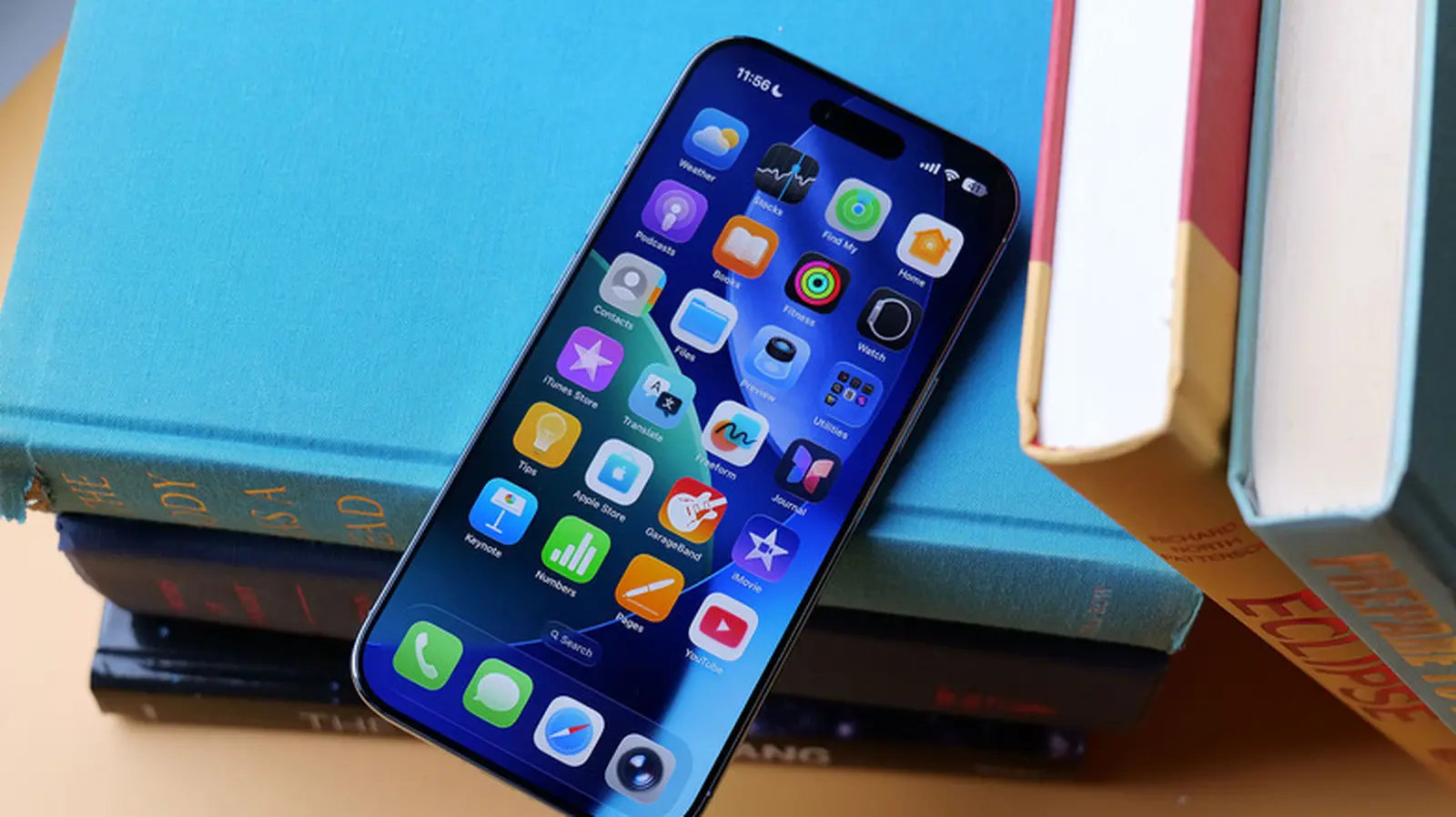
WWDC 2026, Apple's annual Worldwide Developers Conference, runs from June 8 to June 12, and by all indications, the company has some of its most important updates in years to unveil. While last year's event introduced Liquid Glass—a new design material that now permeates all of Apple's operating systems—this year's focus is less about aesthetics and more about functionality, especially in the realm of artificial intelligence. After a series of delays and a surprising partnership with Google, Apple appears ready to reveal a completely overhauled version of Siri that could finally compete with ChatGPT and Gemini.
The conference will be streamed live on Apple's website, YouTube channel, and the Apple Developer Bilibili channel in China. In addition to the main keynote, Apple will host its Platforms State of the Union stream and individual developer workshops on its developer website. These sessions will offer deeper dives into the software updates that will ship later this year. Based on a steady stream of leaks from reliable sources like Bloomberg's Mark Gurman, the headline announcements will revolve around iOS 27, iPadOS 27, macOS 27, watchOS 12, visionOS 3, and tvOS 20, all of which are expected to feature stability improvements and a renewed AI push.
iOS 27: A Redesign Centered on Siri
According to the latest Bloomberg report, iOS 27 will be heavily redesigned around Siri. The revamped assistant will be able to work with onscreen content and a user's personal data, a capability that was originally promised for Apple Intelligence in 2024 but delayed multiple times. Apple's partnership with Google, announced in January 2026, is believed to leverage Gemini models to make these features finally work. The redesign will also move the Siri animation from the bottom of the screen to the Dynamic Island at the top, a change that will be most noticeable on iPhones with the pill-shaped notch. Users with older models may not get the same experience.
Bloomberg's renderings show a new 'Ask' or 'Search' interface that can be brought up by swiping down from the top center of the iPhone. This replaces the old Notification Center gesture, which will now be accessed by swiping down from the top left. The change is sure to frustrate some users, but Apple is betting that the improved functionality will be worth the learning curve. The Siri overhaul is rumored to include a standalone Siri app, designed to compete directly with ChatGPT and Gemini. The app will allow users to prompt the assistant to perform tasks on their device, search the web, and access news. It will also keep a history of past conversations and suggest prompts for the new chatbot version of Siri.
Developers will reportedly be able to integrate their own AI assistants with Siri, similar to how OpenAI's ChatGPT integrates with third-party apps. Apple is also working on an 'Ask Siri' option that could appear in app menus, allowing users to ask questions about in-app content—a feature reminiscent of Google's Ask Maps or Ask Photos. These additions, combined with the ability to perform two actions simultaneously, represent the most significant Siri update since the assistant's launch in 2011.
A Snow Leopard-Style Focus on Stability
In addition to the AI-focused changes, Apple is taking a page from its own history by prioritizing performance and stability. Bloomberg reported in November 2025 that iOS 27 would adopt a Snow Leopard-like approach. Mac OS X Snow Leopard, released in 2009, was praised for its focus on refining performance and eliminating bugs rather than adding new features. Apple's engineering teams are reportedly scouring all of its operating systems to cut bloat, fix bugs, and boost performance. This effort is expected to extend to iPadOS, macOS, watchOS, visionOS, and tvOS.
Part of this cleanup involves responding to user feedback about Liquid Glass. The design overhaul, introduced last year, has been controversial among some of Apple's most loyal fans. Reports indicate that Apple may add a system-wide slider that lets users adjust the intensity of Liquid Glass effects, such as translucency and reflectivity. Smaller tweaks have already been made in point releases since iOS 26, but the upcoming updates could go further in improving legibility and overall user experience.
The stability push is also likely to address long-standing issues like notification management, battery drain, and app performance. Apple has been under pressure to deliver more reliable software after several high-profile bugs in recent years. A Snow Leopard-style reset could help restore confidence among users who have grown weary of annual feature-packed updates that sometimes feel half-baked.
The Chatbot-ification of Siri
The most talked-about change is the evolution of Siri into a full-fledged chatbot. Bloomberg's May 2026 report detailed a dedicated Siri app that will serve as the primary interface for interacting with the assistant. The app will allow users to type or speak prompts, much like talking to ChatGPT or Google's Gemini. It will also be able to access a user's personal context—such as messages, calendar events, and photos—to provide more relevant answers. Apple has promised strong privacy protections, emphasizing that all processing will be done on-device with the help of a new neural engine integrated into the upcoming A20 and M6 chips.
The new Siri will also be able to perform cross-app actions. For example, a user could say, 'Send the photo I took last night to Mom,' and Siri would automatically find the photo and send it via Messages. This level of integration was originally part of the Apple Intelligence vision announced at WWDC 2024, but it was delayed multiple times before the partnership with Google. Now, with Gemini powering the underlying AI, Apple appears confident enough to ship the feature.
Developers will gain access to new APIs that allow them to make their apps 'Siri-aware.' This means any app could potentially expose its content and actions to Siri, enabling deeper integration without requiring users to learn specific commands. The new Siri app will also include a conversation history, allowing users to review past interactions and continue where they left off. Apple is reportedly working on a suggestion engine that will proactively offer prompts based on the user's habits, similar to the 'Suggested Prompts' seen in other AI chatbots.
When to Expect the Updates
While WWDC typically announces software that ships in the fall, the revamped Siri could arrive as early as September 2026. Bloomberg's report suggests that this may be Tim Cook's final major product launch before handing the CEO role to John Ternus, Apple's senior vice president of Hardware Engineering. If the timeline holds, the new Siri and iOS 27 will be released alongside the iPhone 18 lineup, which is expected to feature the A20 chip with enhanced neural capabilities.
Other operating systems will likely follow a similar pattern: iPadOS 27 and macOS 27 will probably launch in October, while watchOS 12, visionOS 3, and tvOS 20 will ship alongside new hardware later in the year. Apple is also expected to release a developer beta immediately after the keynote, with public betas rolling out in July.
The coming weeks will bring more leaks and rumors, but the core themes are becoming clear: Apple is doubling down on AI after a period of uncertainty, and it's finally ready to deliver a Siri that can go head-to-head with the competition. Combined with a renewed focus on stability, WWDC 2026 could be one of the most consequential developer conferences in Apple's history.
Update, May 29, 2026, 12:13 p.m. EST: This story has been updated to include the most recent Bloomberg report detailing changes to iOS 27 and Siri.
Source: Engadget News