

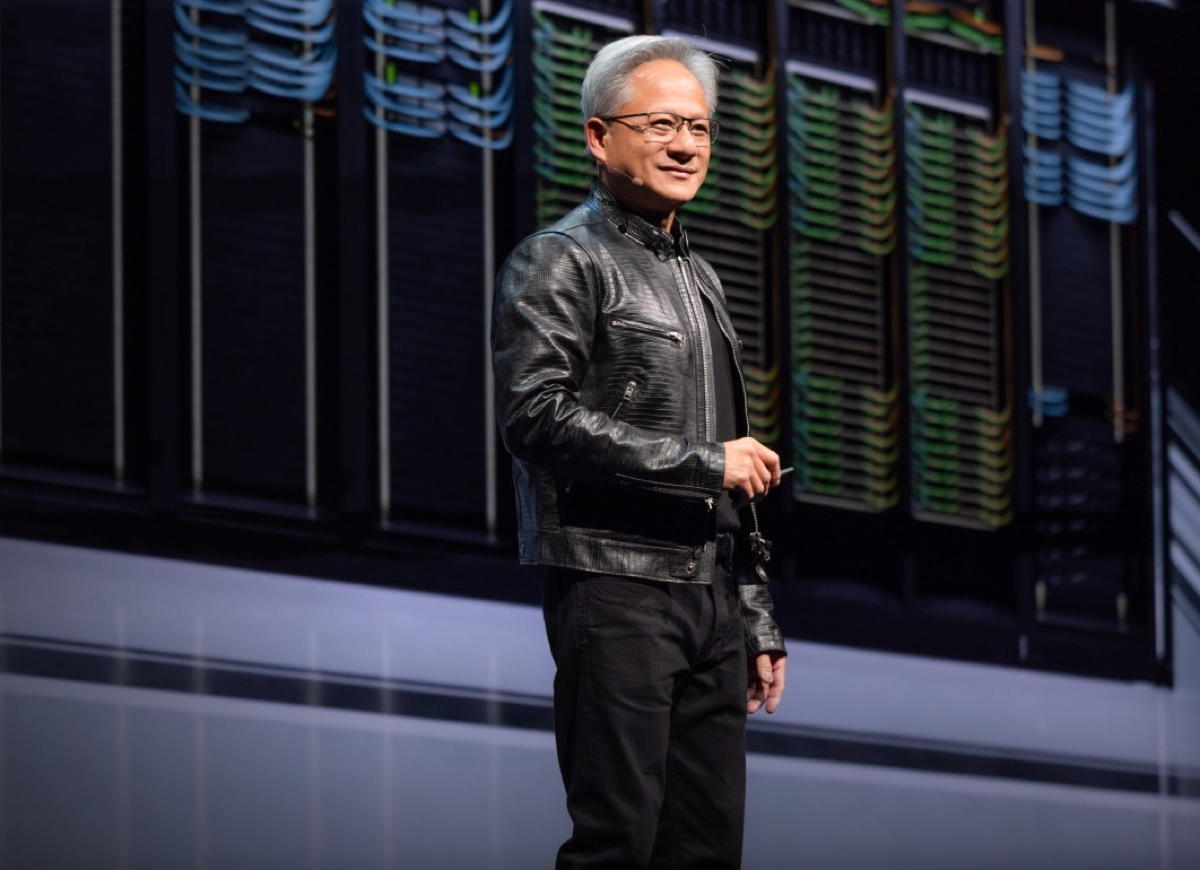
Nvidia chief executive Jensen Huang said the company will “probably” not invest $100 billion (£75bn) in OpenAI, following a much smaller $30bn investment as part of a funding round last week, giving the reason as the AI start-up’s likely IPO sometime this year.
“I think the opportunity to invest $100 billion in OpenAI is probably not in the cards,” Huang said during a Morgan Stanley conference. Because of the expected IPO, “this might be the last time we’ll have the opportunity to invest in a consequential company like this”, Huang added.
Huang also revealed that Nvidia’s recent $10bn investment in Anthropic was probably “the last” in that company due to Anthropic’s expected IPO. These remarks come after months of intense speculation about the relationship between Nvidia and OpenAI, the two most prominent leaders in the generative AI boom that has swept the world.
In September, Nvidia had announced plans to invest up to $100bn into OpenAI over several years, with investment rounds tied to the start-up’s successive deployments of Nvidia’s chips in data centres. However, the companies provided few details at the time, and the agreement was reportedly stalled by January.
The initial announcement spurred further similar announcements and drove up stock prices, but the deal was never finalised. The economics of the AI boom have since shifted dramatically, with last year’s optimistic announcements giving way to the realities of building massive data centres for powering the technology.
Such facilities consume huge amounts of power, water, and other natural resources, and potentially drive up prices for local residents, something that has been drawing increasing backlash from communities and regulators. This has forced companies like Nvidia and its partners to reconsider the scale and pace of investments.
Background on the Nvidia-OpenAI Relationship
Nvidia and OpenAI have been intertwined since the early days of the AI revolution. Nvidia’s graphics processing units (GPUs) became the backbone of deep learning, and OpenAI relied heavily on Nvidia's hardware to train its large language models, including the GPT series. The relationship deepened when Microsoft invested billions in OpenAI, committing to use Nvidia chips in its Azure cloud infrastructure. However, tensions have also emerged as OpenAI explored developing its own AI chips and diversified its supply chain, potentially reducing reliance on Nvidia.
Huang’s comments highlight a cautious approach. While Nvidia remains the dominant supplier of AI chips, with over 80% market share in data centre GPUs, the company is balancing its role as a hardware provider with potential conflicts of interest. Investing heavily in a single AI startup could alienate other clients like Google, Amazon, and Meta, all of which are developing their own AI models.
The AI IPO Wave
OpenAI’s expected IPO is one of the most anticipated events in the tech world. The company, valued at over $80 billion in private markets, is seen as the flagship of generative AI. An IPO would provide liquidity to investors and employees, but it also means that early-stage investment opportunities like the one Nvidia contemplated may no longer be available at attractive terms. Huang noted that regulatory concerns and market volatility could further complicate large-scale investments.
Anthropic, another major AI startup focused on safety and alignment, is also rumoured to be preparing for an IPO. Nvidia’s $10bn investment in Anthropic was seen as a strategic move to diversify its AI portfolio beyond OpenAI. But Huang’s statement that this was likely the “last” such investment suggests Nvidia is shifting its strategy towards more measured, partnership-based approaches rather than equity stakes.
Changing Economics of AI Data Centres
The cost of building and operating AI data centres has skyrocketed. A single large-scale training cluster can require tens of thousands of GPUs, costing billions of dollars, and consume as much electricity as a small city. This has led to a reevaluation of return on investment. Nvidia’s own revenue has surged, but the company is aware that its customers – cloud providers and AI startups – face mounting pressure from investors to show profitability.
Meanwhile, environmental concerns are growing. A recent study estimated that training a single large AI model can emit as much carbon as five cars over their lifetimes. Water consumption for cooling data centres is also significant, particularly in drought-prone regions. These issues have sparked protests and regulatory scrutiny in areas like California, Virginia, and Europe.
Industry Reactions and Implications
Huang’s pronouncements sent ripples through financial markets. Some analysts saw it as a sign that the AI investment bubble may be deflating, while others argued it was a prudent move in a rapidly changing landscape. Competitors like AMD and Intel are also vying for AI chip market share, and startups like Cerebras and Graphcore offer alternative architectures. Nvidia’s dominance is not guaranteed, and its cautious investment strategy reflects the need to preserve capital for R&D and partnerships.
OpenAI, for its part, has continued to forge ahead. The company recently launched GPT-4o and is working on next-generation models that could further push the boundaries of AI. Its reliance on Nvidia hardware remains high, but the startup is also investing in custom silicon and exploring other chipmakers. The prospect of an IPO in 2025 could provide OpenAI with the capital to accelerate these efforts.
Anthropic, meanwhile, has focused on constitutional AI and safety research, positioning itself as a more responsible alternative. Its $10bn investment from Nvidia helped fund massive compute resources for training its Claude models. However, like OpenAI, its future growth may depend on going public or forming deeper alliances.
Broader Context in the AI Boom
The generative AI boom began in late 2022 with the public release of ChatGPT, sparking a wave of investment and innovation. Nvidia quickly became the primary beneficiary, with its market cap surpassing $2 trillion. But the boom has also produced challenges: geopolitical tensions over chip exports, supply chain bottlenecks, and the high cost of inference (running models) versus training. Companies like Microsoft, Google, and Amazon have invested billions in AI, but they are also developing their own chips to reduce dependence on Nvidia.
Huang’s remarks underscore a maturation of the industry. The early phase of “everyone investing in everything” is giving way to a more selective, ROI-focused strategy. The era of massive, open-ended investments in AI startups may be fading, replaced by partnerships with clear milestones and exit strategies.
As the AI landscape evolves, the relationship between hardware providers and model developers will remain critical. Nvidia’s decision to step back from a $100bn investment in OpenAI does not signal a loss of confidence, but rather a recognition that the dynamics of the market have changed. The next few years will likely see more IPOs, more consolidation, and more scrutiny of AI’s resource demands. For now, Huang has made it clear that Nvidia will choose its bets carefully, and that even the most promising AI startups must eventually stand on their own in public markets.
Source: Silicon UK News