

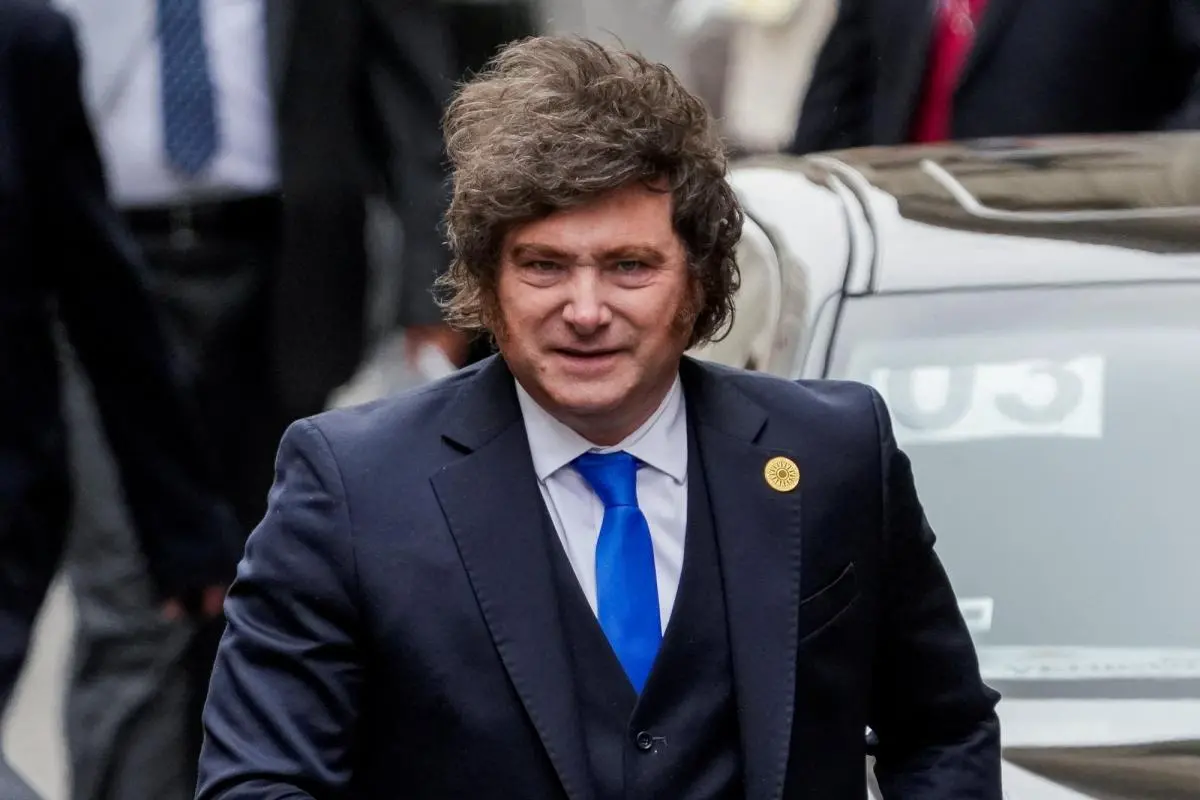
Argentine President Javier Milei used the stage of the FIA's American congress in Buenos Aires on Monday to make a direct appeal: bring Formula 1 back to Argentina. The country has not hosted a Grand Prix since 1998, and Milei believes the time is right for a return.
"We have the tradition, we have the drivers, and now we are beginning to have the institutional seriousness" required to organize F1 races, Milei told the gathering. His comments were the latest sign of a renewed Argentine push to rejoin the international motorsport calendar, with the sport enjoying a surge of local interest thanks to Franco Colapinto.
A long absence
Argentina's last Formula 1 Grand Prix took place in 1998 at the Autódromo Oscar Alfredo Gálvez in Buenos Aires, with Michael Schumacher taking victory for Ferrari. That race was a shadow of the country's storied F1 past, decades after the circuit first appeared on the calendar in the 1950s. In those early years, the Argentine Grand Prix was a regular fixture, drawing the world's best drivers to South America.
The country's F1 heritage is among the richest in the sport outside Europe. Juan Manuel Fangio, often ranked as one of the greatest drivers of all time, won five world championships between 1951 and 1957, a record that stood for nearly half a century. His exploits made him a national hero and cemented Argentina as a motorsport nation.
In the 1970s and 1980s, Carlos Reutemann carried the flag, winning 12 Grands Prix and finishing as runner-up in the 1981 world championship. Reutemann's career, which straddled Brabham, Ferrari and Williams, gave Argentine fans regular reasons to celebrate. Yet after his retirement and a brief political career, Argentina's presence in F1 gradually faded.
The Colapinto effect
The appetite for F1 has never fully disappeared in Argentina, but it has been reignited by the emergence of Franco Colapinto. The young driver, who joined the Alpine team in 2024, has become a phenomenon in his home country. In April, an exhibition event in Buenos Aires featuring Colapinto drew an estimated half a million people, according to organizers. Images of huge crowds lining the streets and packing the circuit made headlines around the world.
For Milei, Colapinto's popularity is both a source of national pride and a political opportunity. "We want to see Colapinto racing in the country," he said on Monday. The president, known for his flamboyant style and his admiration for motorsport, has been keen to associate himself with the sport's revival. His government has also been courting international events as part of a broader effort to burnish Argentina's image abroad.
Circuit renovation and future plans
The main obstacle to an Argentine Grand Prix has long been the state of the Buenos Aires circuit. The Autódromo Oscar Alfredo Gálvez, named after two Argentine racing drivers from the 1940s and 1950s, is currently undergoing a major renovation. The municipal government has approved a $100 million project that includes a new track layout and new grandstands, with the goal of hosting MotoGP and, eventually, Formula 1.
According to the Buenos Aires municipality, the works are expected to run until early 2027. That timeline could fit with F1's desire to expand its calendar in the Americas, although no official talks with Liberty Media or the FIA have been announced. The renovation is designed to modernize the aging facility and bring it into compliance with current FIA safety standards.
Milei's appeal is also a reminder of the geopolitical dimension of Formula 1. The sport has been adding new venues in the Middle East and the United States, while traditional European races have come under pressure. A return to Argentina would give F1 a stronger foothold in South America, where Brazil currently hosts the only Grand Prix on the continent.
Fangio's legacy
No discussion of an Argentine Grand Prix would be complete without recalling the country's extraordinary contribution to Formula 1 history. Juan Manuel Fangio's five drivers' titles stand alongside the achievements of Michael Schumacher, Lewis Hamilton and Alain Prost at the top of the sport's record books. Fangio's dominance was built on an unusual combination of raw speed and mechanical empathy, and he remains a benchmark for every era of the sport.
The Argentine Grand Prix itself has had a complicated history. Held intermittently between 1953 and 1998, it was often plagued by organizational issues, economic crises and changing regulations. In the 1980s, multiple races were held at the Juan and Oscar Gálvez circuit, with memorable clashes between legends such as Alain Prost, Ayrton Senna and Nigel Mansell. But political instability and financial problems eventually pushed F1 away.
Institutional change and political ambitions
Milei, a libertarian economist who took office in 2023, has made no secret of his desire to liberalize the Argentine economy and attract international investment. Hosting a Grand Prix would be a symbolic victory for his administration, demonstrating that Argentina is open for business and capable of staging world-class events. His comments at the FIA congress were carefully calibrated to emphasize the country's new institutional stability, a theme that resonates with his supporters and with international audiences.
However, significant challenges remain. The renovation of the circuit is only part of the equation. Any candidate host country must pay a substantial hosting fee to Formula One Management, and Argentina's fragile economy is still dealing with high inflation and a lack of foreign currency. Local media have speculated about possible public-private partnerships, but no concrete financing plan has been revealed.
Moreover, the international motorsport calendar is crowded. Formula 1 has expanded to 24 races in 2026, with new events in Las Vegas, Miami and Qatar. Adding another race in South America would require either replacing an existing venue or expanding the calendar further, which is unlikely in the short term. Nevertheless, enthusiasm from fans and the recent success of Colapinto, who has become a regular points scorer for Alpine, have given Argentine supporters hope.
MotoGP as a stepping stone?
The renovation of the Buenos Aires circuit initially targets MotoGP, which could provide a benchmark for the circuit's readiness. The project's backers have pointed out that MotoGP requires many of the same safety and hospitality standards as F1. If the circuit can successfully host the motorcycle world championship, it would go a long way toward convincing F1 officials that Argentina is ready to return.
Speculation about a possible Argentine Grand Prix has been circulating for years. The country has a strong motor racing culture, with prominent drivers in touring cars, rallying and other disciplines. The FIA congress in Buenos Aires, which opened this week, is itself a sign of the sport's recognition of Argentina as an important market.
Milei's appeal was brief but clear. He did not announce a formal bid or provide a timeline, but his presence at the FIA podium gave the issue unprecedented political visibility. In a country where motorsport has always been a point of pride, his words were met with enthusiasm by fans and officials alike.
For now, the immediate focus is on the ongoing construction at the Gálvez circuit and the upcoming MotoGP event. If the renovation stays on schedule, Argentina could have a modern facility by 2027, just in time for tense negotiations over future F1 calendars. The prospect of seeing Colapinto racing at home is a tantalizing one for Argentine fans, and Milei has made it clear that he intends to do everything in his power to turn that dream into reality.
Source: L'Équipe News