

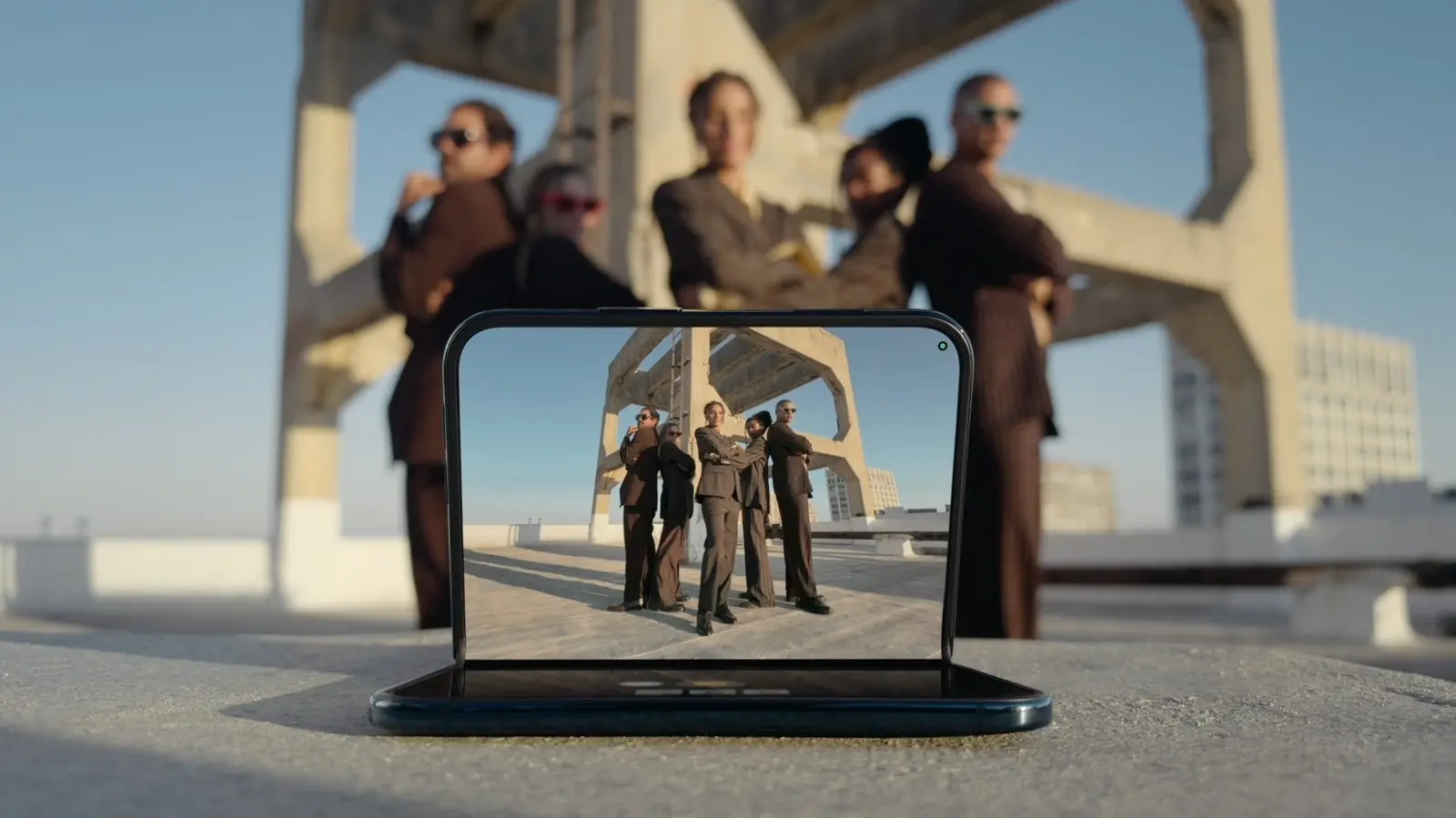
Group selfies have always involved a small dose of chaos. Someone props a phone against a water bottle, sets a timer, and then everyone rushes into frame, trying to look natural while secretly counting down the seconds. The result is often a blur, a blink, or a pose that arrives a moment too late. Apple is now trying to remove some of that friction with the iPhone Duo, a foldable device that the company is positioning as a major step forward for group photography.
The pitch was impossible to miss during Apple's September event. Although the iPhone Duo was only one product on a busy slate, the company devoted a noticeable amount of time to group selfies. That focus says something about where Apple believes the foldable can stand out. Other smartphone makers have experimented with similar camera tricks for years, but Apple is betting that its combination of hardware and software will make group selfies feel less like a workaround and more like a native feature.
Key facts at a glance
- The iPhone Duo is a foldable iPhone shipping on October 23 with a $2,000 entry price.
- Apple is leaning heavily into group selfies as a key use case for the device.
- The Duo can be tented or flipped to use its 48-megapixel rear cameras for selfies.
- Previous iPhone front cameras have been limited: 18 megapixels on the iPhone 18 Pro's Center Stage camera and 12 megapixels on the Duo's internal Center Stage camera.
- New iOS 27 features include Smart Take, which automatically snaps when everyone freezes, and Duo Preview, which shows a live preview on the front screen.
- Smart focus tracking lets users tap a subject and have the AI follow it, even if it temporarily leaves the frame.
- Limitations include no telephoto lens, awkward handheld grip, stability concerns, and the risk of placing the front display against the ground.
Until now, iPhone owners have had relatively little flexibility for group selfies. Even the most advanced front-facing camera on the iPhone 18 Pro tops out at 18 megapixels. The Duo's internal Center Stage camera is even more modest at 12 megapixels. Users can get 48 megapixels from one of the rear cameras, but those sensors have traditionally been difficult to use for group shots because the photographer also needs to be in the picture. The common solution is to find an object to prop the phone on, frame the shot, and hope the timer lasts long enough for everyone to get into position.
The Duo aims to fix that through its foldable form factor. By tenting the device or opening it fully and flipping it around, users can access the 48-megapixel rear cameras while still seeing themselves on the front display. That is a meaningful change. More megapixels do not automatically produce better photos, but they can translate into sharper images and extra room for cropping. Just as important, Apple typically reserves its best camera technology for the rear sensors, especially when it comes to low-light sensitivity and focus tracking.
Going foldable means a better sensor and better software
The ability to tent an iPhone Duo and use the 48-megapixel rear cameras should not be undersold. While 18 megapixels, or just 12 megapixels on the Duo's internal Center Stage camera, is sharp enough for many situations, extra resolution can make a difference when a group shot needs to be cropped or when lighting is less than ideal. Apple's rear cameras also tend to offer better performance in dim conditions, which is often exactly when group selfies are taken at dinners, parties, and evening events.
One of the smaller upgrades Apple is touting is smart focus tracking. In practice, this is a rebranding of the focus lock that standalone cameras have had for some time, but it is still useful in a phone. Once you tap on a subject, the Duo's AI systems will follow that person and adjust focus on the fly, even if they temporarily leave the frame. For group selfies, this could help keep the most important faces sharp as people move around, lean in, or step out of view for a moment.
There is a connection between smart focus tracking and the centerpiece of Apple's group selfie features: Smart Take. In theory, Smart Take eliminates the need for timers by scanning for motion. When triggered, it automatically takes a snap whenever everyone freezes for a moment, with the assumption being that they have adopted a new pose. This seems likely to produce as many bad shots as good ones, since people may have their eyes closed or be standing around waiting for direction. Even so, it is a welcome alternative to selecting a timed shot, checking the results, and then repeating the process over and over.
You can find the Smart Take option in the Camera app's extended settings menu. Since iOS 27 finally lets users customize the app's controls, you should also be able to keep a Smart Take button permanently at the ready. The customization process involves tapping the circles button in the lower-right corner and then choosing Edit. That level of control is useful not only for group selfies but also for solo selfies. Coordinated group shots are often the most difficult, as any professional wedding photographer knows, because multiple people have to look good at the same time.
The other big software addition is Duo Preview. When activated during a shot, this displays a real-time preview on the front screen, allowing the subjects to see themselves and make their own pose adjustments. Expect this to be a double-edged sword. Some people will inevitably ham things up or do what they think works instead of what the photographer actually wants. Still, this is undeniably a step forward, to the point that some candybar iPhone owners may feel a little jealous.
Software integration and the iOS 27 experience
Apple's approach with the Duo is not just about adding a new camera mode. It is about tying the foldable hardware to iOS 27 in a way that makes the device feel different from a standard iPhone. The Camera app's customizable controls are a good example. By allowing users to rearrange or prioritize buttons, Apple gives people a way to keep the features they use most often within easy reach. For frequent group selfie takers, that could mean having Smart Take and Duo Preview accessible without digging through menus.
The integration also matters because foldables create new physical possibilities. A standard iPhone can be propped up, but it cannot easily change its shape to support a better camera angle. The Duo can. When it is partially folded, it can stand on a table like a small tent. When it is opened fully and turned around, the rear camera array faces the user while the front display acts as a viewfinder. These may sound like minor conveniences, but they change the entire workflow of taking a group shot. Instead of rushing into frame, people can see the composition, adjust their positions, and wait for the right moment.
That said, Apple is not the first company to explore these ideas. Other foldable phones have offered similar rear-camera selfie modes and cover-screen previews. Apple's version arrives later, but it may benefit from tighter software integration and a more polished user experience. The company has a history of taking features that already exist and making them easier for mainstream users to understand. If the Duo can do that for group selfies, it could help normalize a style of photography that has often felt improvised.
You can expect a few limitations
There are some flaws in Apple's first-generation foldable selfies, beginning with the fact that there is no telephoto lens. Admittedly, most group shots are best taken with a wide or even ultra-wide lens. One of the chief rules of good composition, however, is to fill the frame with your subjects. Sometimes you may not be able to sit your Duo close enough to make that happen. Without a telephoto option, photographers will have to rely on cropping, which can reduce image quality even with a 48-megapixel sensor.
Another issue is handheld selfies. Users are encouraged to open the Duo all the way and flip it around to get those 48-megapixel cameras, but the grip needed seems a little awkward, mostly because of the thin bezels on the front display. It could be tough to get a good handle without accidentally triggering touchscreen commands. To Apple's credit, this mode automatically brings all of the Camera app's controls to the front, so there is no blind shooting involved.
A big concern for some people with group selfies might be the vulnerability of a Duo left standing by itself. On top of the theft risk, users will have to see how stable the Duo is in real-world situations. At 8.96 ounces, it is light enough to be tipped over by the wind or a nearby bump. Meanwhile, Apple's notion that some group shots should be taken with the front display touching the ground is going to be a non-starter for many users, unless they buy a case that creates a protective lip. The Duo's Ceramic Shield 2 glass may be scratch-resistant, but no display is scratchproof.
Those limitations do not erase the potential of the device, but they do suggest that the first-generation Duo is not a perfect solution. It is a new kind of iPhone, and like many first-generation products, it may appeal most to early adopters who are willing to tolerate some rough edges. The $2,000 entry price makes that trade-off even more significant. For that amount of money, buyers will expect the group selfie features to work smoothly and consistently.
What the Duo means for the future of iPhone photography
The iPhone Duo is arriving at a moment when smartphone photography is increasingly defined by computational tricks rather than raw hardware alone. Smart Take and Duo Preview are both software-driven features that depend on the foldable form factor. They show how Apple is thinking about the camera as part of a wider system that includes sensors, AI, display design, and app controls. That system-level approach is often where Apple is strongest, and it could help the Duo stand out even if individual features have appeared elsewhere.
For casual users, the biggest benefit may simply be convenience. Group selfies are common at birthdays, weddings, vacations, and nights out. Anything that reduces the stress of setting up a shot and getting everyone into frame is likely to be appreciated. Smart Take, in particular, could become a favorite for people who hate timers. Instead of counting down, they can simply hold a pose and let the phone decide when to capture the moment. It may not always choose the perfect instant, but it may often be good enough.
For more serious photographers, the Duo is less likely to replace a dedicated camera, but it could still be a useful tool. Duo Preview gives subjects more control over their own appearance, which can be helpful when shooting large groups. Smart focus tracking can help maintain sharpness as people move. The ability to use the 48-megapixel rear sensors for selfies is a clear upgrade over the front camera, even if the handling is not ideal. These features together suggest that Apple is trying to make the foldable more than just a novelty.
Whether the Duo succeeds will depend on how well these features work in practice. The Smart Take system could misread natural pauses as posed moments, leading to awkward captures. Duo Preview could encourage people to focus on the screen rather than the photographer, creating a different kind of distraction. The lack of a telephoto lens and the stability concerns could frustrate users in certain situations. Yet the overall direction is clear: Apple wants the iPhone Duo to change how people take group selfies, and it is willing to devote significant event time to the idea.
The device ships on October 23, and its $2,000 price means it will not be for everyone. Still, the group selfie features offer a glimpse at the future of iPhone photography. If the foldable form factor becomes more common, the ability to use rear cameras for selfies, see a live preview on the front screen, and let AI choose the moment of capture could become standard. The first-generation Duo may be imperfect, but it points toward a version of mobile photography where the hardest part of a group selfie is no longer the technology.
Source: Engadget News