

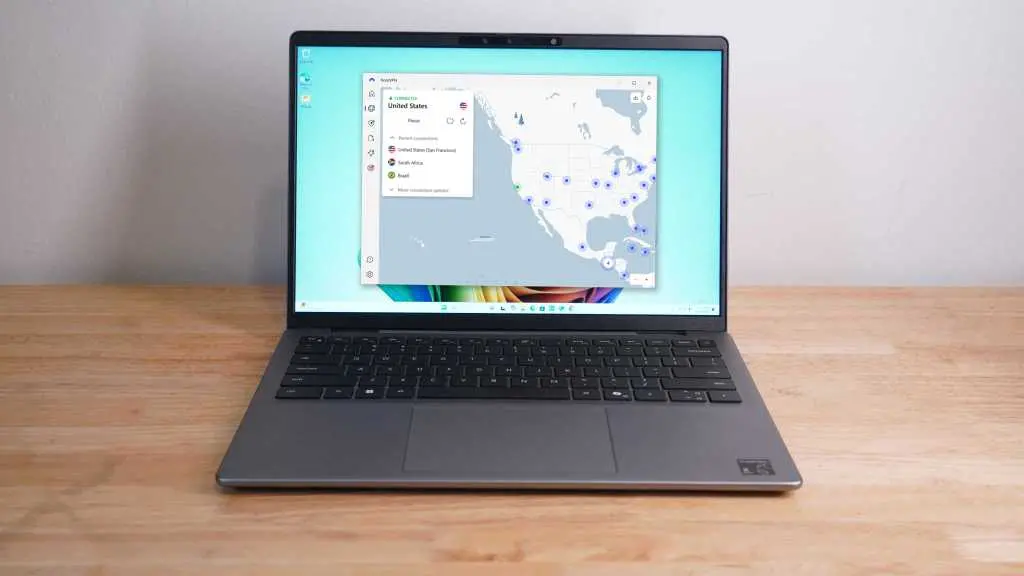
A virtual private network has become a mainstream security tool, but the market is crowded and the differences between services matter. The strongest options combine privacy safeguards, fast connections, broad server coverage, streaming access, and clear pricing. The latest comparison of leading services identifies seven standout picks for common VPN needs, from all-around performance to anonymity, budget plans, free access, and travel-friendly coverage.
Key facts at a glance
- Best overall: NordVPN combines top-tier speeds, a large server network, independent audits, and a deep feature set that includes malware blocking, a password manager, multi-hop connections, and access to the Tor network over VPN.
- Runner-up: ExpressVPN delivers excellent speeds, wide device support, strong streaming performance, and a long record on privacy, though it is priced higher and offers fewer extra security tools.
- Best cheap option: Surfshark offers unlimited device connections, a robust feature set, and low long-term pricing, but its month-to-month plans are costly and many servers are virtual.
- Budget runner-up: Private Internet Access provides unlimited connections, a very large server network, and repeated no-logs audits, but its app feels dated and speeds are mid-range.
- Best free VPN: Proton VPN has an unusually generous free plan with no ads, no data caps, 10 server locations, and good speeds, while its paid tiers are more expensive.
- Best for privacy: Mullvad avoids collecting identifying information, assigns random account numbers, accepts cash payments, and has a strict no-logs policy backed by audits, though streaming support is weak.
- Best for travelers: CyberGhost operates more than 11,500 servers in over 100 countries, offers a 45-day money-back guarantee, and recommends optimized servers for streaming, gaming, and torrenting.
Why VPN selection now depends on more than anonymity
VPNs were once judged mainly on their ability to hide an IP address. That remains important, but modern buyers also expect fast speeds for video calls and streaming, apps that are simple enough for beginners, and enough device support for phones, laptops, routers, and televisions. Privacy is still the foundation: users should look for clear no-logs policies, strong encryption, trusted protocols such as WireGuard and OpenVPN, kill switches, leak protection, and independent audits that verify company claims.
The latest roundup also shows how much the category has matured. Top services now bundle ad blocking, malware protection, password managers, split tunneling, multi-hop routing, and specialized servers. That breadth can be useful, but it can also obscure the basics. A service with dozens of features is not automatically better than one that executes the fundamentals well. The most reliable approach is to match the VPN to the user’s main need: privacy, budget, travel, streaming, or a free tier.
NordVPN leads on features and speed
NordVPN takes the overall recommendation because it balances nearly every major requirement. In speed testing, it averaged about 72 percent of the base internet speed across servers, making it the fastest service in the comparison. That performance matters for high-bandwidth tasks such as 4K streaming, large downloads, and video conferencing. The service also operates a large global network and uses RAM-only, diskless servers, which reduces the risk of data being retained on physical hardware.
Its desktop app is approachable for beginners but includes tools for advanced users. Those extras include multi-hop connections, access to the Tor network over VPN, the Meshnet file-sharing feature, ad and malware blocking, a password manager, and a link checker. NordVPN also performs well with streaming services and has undergone independent audits. The main drawback is price. Even long-term plans can cost more than budget competitors, but the service justifies the premium for users who want a comprehensive toolset and top speeds.
ExpressVPN remains a close runner-up
ExpressVPN is a strong alternative for users who want a polished experience across many devices. It delivers excellent speeds, unblocks major streaming platforms, and maintains strong security and privacy practices. Beginners can install the app, choose a location, and connect without much effort, while advanced users can adjust split tunneling, protocol settings, and the kill switch.
The service supports a wide range of platforms and allows up to 14 simultaneous connections depending on the subscription tier. Its Lightway protocol, including a newer Lightway Turbo option, is designed to improve speed on many connections, though results can vary by server. ExpressVPN has also expanded beyond core VPN functions with ad and tracker blocking and a password manager. It costs more than many rivals and offers fewer extra security features than NordVPN, but its privacy record and streaming reliability keep it near the top.
Surfshark and Private Internet Access target budget buyers
Surfshark is the best cheap VPN for users willing to commit to a long-term plan. It combines fast speeds, a feature set that ranks just behind NordVPN, and strong privacy credentials, including a no-logs policy and multiple independent audits. Subscribers get standard VPN tools plus dynamic multi-hop connections, identity protection alerts, and antivirus and malware protection. Its most distinctive advantage is unlimited simultaneous device connections, which makes it practical for households with many phones, computers, and tablets.
The trade-off is that monthly plans are expensive, and a large share of its global servers are virtual rather than physically located in every country. Surfshark is based in the Netherlands, a country with strong privacy laws but also a member of the 14 Eyes intelligence-sharing alliance. Its independently verified no-logs policy reduces the practical risk, but privacy-focused buyers should still note the jurisdiction.
Private Internet Access is the budget runner-up. It has passed multiple independent no-logs audits, offers unlimited device connections, and maintains a vast server network with more than 35,000 servers, though it covers fewer countries than some rivals. Its subscription plans are among the least expensive for a top-tier VPN. Power users may appreciate the high level of customization. However, the app interface feels clunky, and speeds are fairly pedestrian compared with the fastest services. PIA is a value pick rather than a performance leader.
Proton VPN stands out in the free tier
Proton VPN offers the best free VPN option in the comparison. Many free VPNs impose harsh data caps, show ads, or limit access to a handful of overloaded servers. Proton VPN avoids ads, sets no monthly data limit, and provides access to 10 server locations on the free plan. The free tier limits users to one device connection, but speeds remain good enough for browsing and occasional streaming.
The service comes from the company behind Proton Mail, a privacy-focused email provider, and it has undergone independent audits confirming its no-logs policy, including for the free product. Paid plans add more servers, more devices, and streaming-optimized connections, but they are not the cheapest on the market. Users who need only occasional protection can stay on the free plan, while those who need more capacity should compare the paid tiers carefully.
Mullvad puts anonymity first
Mullvad is the strongest choice for users who prioritize anonymity above all else. The company does not ask for an email address or name. Instead, it assigns a random account number that serves as the identifier and login. It accepts standard payment methods, but users can also mail cash to reduce the digital trail. Mullvad collects no identifying metadata and has a strict no-logs policy backed by multiple independent security audits.
That focus on privacy comes with trade-offs. The server network is relatively small, streaming support is weak, and the service lacks many of the extra features offered by competitors. Speeds are still fast enough to rank among the top five in testing, and the flat fee across plan lengths makes monthly subscriptions affordable. Long-term users may find less value than they would with a discounted multi-year plan from another provider, but privacy-focused buyers will appreciate the company’s transparent practices and refusal to collect unnecessary data.
CyberGhost focuses on travelers and server variety
CyberGhost is the best pick for frequent travelers because of its enormous server network. It offers more than 11,500 servers across over 100 countries, giving users a wide range of locations for privacy, streaming, and regional access. The network is not concentrated solely in the United States or Europe, which improves options for users outside major markets. CyberGhost also recommends optimized servers for gaming, streaming, and torrenting, and it operates special NoSpy servers housed in its own offices in Romania.
The service has an independently verified no-logs policy and a generous 45-day money-back guarantee. Its Windows app is well designed and easy to use. It lacks some power-user features such as multi-hop and IP rotation, and speeds can vary by region: European servers performed well in testing, while Asian servers were less consistent. The company is upgrading its network to 10Gbps, which should improve performance over time. For travelers who value coverage and location variety over advanced configuration, CyberGhost is a practical choice.
Other services worth knowing
Several additional VPNs are worth considering depending on specific needs. PrivadoVPN has a strong free version that ranks second only to Proton VPN in that category, though its server network is smaller and its feature set is less extensive. Windscribe Pro offers solid security and a browser extension that works with its Windows client to block ads, but its interface can be awkward and its server network is limited. Hide.me is well rounded and highly configurable, making it appealing to power users, but recent speed tests were inconsistent and its Windows app can be difficult for beginners.
IPVanish covers the basics well with decent speeds, a large global server network, and privacy promises backed by independent audits. It struggles with some streaming services and has a steep monthly price. Norton VPN is simple and effective, with an easy-to-use interface and recent upgrades to features and privacy commitments, but it offers only yearly pricing and its server network remains smaller than those of top competitors.
How VPN services are evaluated
VPN reviews typically compare server networks, connection speeds, privacy protections, ease of use, additional features, and cost. Speed tests average connections between global locations and compare them with a baseline internet speed, which gives a more realistic picture than a single best-case result. Reviewers also examine privacy policies and company histories for discrepancies or data collection issues. Ease of use is subjective, but hands-on testing shows whether an app is intuitive or frustrating. Value is judged by comparing price and features with industry averages.
What buyers should compare before subscribing
Server network and locations
A service with at least 1,000 servers and 30 or more country locations is generally worth considering. More important than raw numbers is whether servers are physically present in the places users need. Virtual servers can be useful, but they may not provide the same legal jurisdiction or performance as physical servers.
Speed and consistency
Speed is difficult to judge without testing, so buyers should rely on reviews that report relative averages rather than isolated peak numbers. Consistency across servers and times of day matters more than a single fast result. Streaming, gaming, and large downloads put different demands on a VPN, and performance can vary by location.
Privacy and audits
Users should look for a clear no-logs policy, strong encryption, a kill switch, DNS leak protection, and trusted protocols such as WireGuard or OpenVPN. Independent audits add credibility because they verify that a company follows its stated policies. The company’s jurisdiction, ownership, and transparency also matter.
Price, renewals and guarantees
Cheap introductory prices can hide expensive renewal rates. Buyers should compare the total long-term cost, the renewal price, the money-back guarantee, and the features included in each tier. The best value is not always the lowest monthly price; it is the service that delivers the needed speed, privacy, and features at a fair total cost.
Features that matter most
A long feature list can be distracting, but several tools are genuinely useful. A kill switch blocks internet access if the VPN disconnects, preventing accidental exposure. Split tunneling lets users route some traffic through the VPN while other traffic, such as games, stays unencrypted for performance. Multi-hop routing sends traffic through two or more VPN servers for added privacy. Protocol choice also matters: WireGuard is a strong default for most users because it is fast, open source, and continually reviewed for security.
Common questions about VPNs
A VPN creates an encrypted tunnel between a device and the internet. Traffic is routed through a VPN server, making it appear to come from that server’s location, and encryption prevents internet service providers and other third parties from seeing specific online activity. Public Wi-Fi is a common use case because open networks can be monitored by attackers. A VPN reduces that risk by encrypting traffic and masking the user’s IP address.
VPNs do not make users completely anonymous. Site-level tracking, logged-in accounts, cookies, and browser fingerprinting can still identify users. A VPN also may slow an internet connection because traffic is rerouted and encrypted, though the impact depends on the server location and the quality of the service. Modern VPNs with fast protocols and well-distributed servers can minimize the slowdown.
Source: PCWorld News