

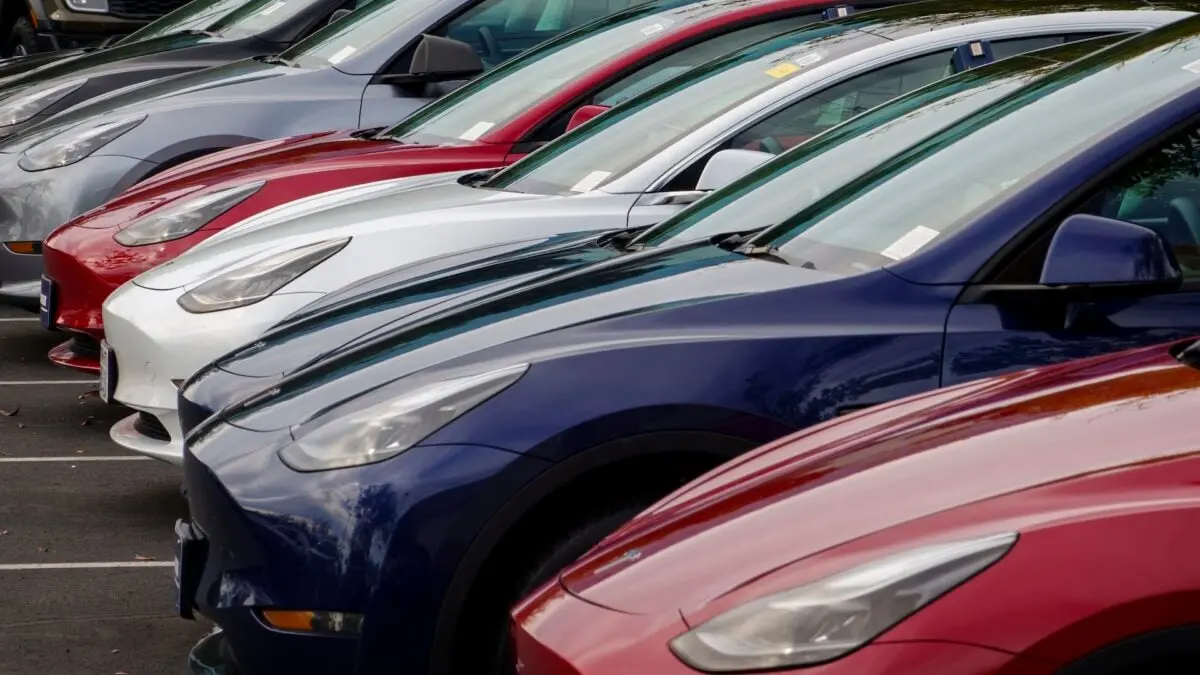
Tesla's sales in Europe had taken a nosedive in 2025, largely due to the political maneuvering of its CEO, Elon Musk. His embrace of hardcore conservative politics, direct involvement in the Department of Government Efficiency (DOGE), and personal ties to former President Donald Trump soured the appetite of European buyers. The situation was compounded by Trump's threats to take over Greenland and the imposition of tariffs on the continent. Musk's promotion of far-right and anti-immigrant movements, including Germany's AfD party, and accusations of inciting violence related to demonstrations in Belfast further damaged Tesla's reputation. Yet, time appears to heal all wounds. As of mid-2026, Tesla is experiencing a remarkable comeback in Europe, with the company announcing plans to hire 1,000 new workers at its Gigafactory near Berlin and ramping up production to 7,500 vehicles per week by October.
The production boost is significant. According to Electrek, this would put Tesla's German factory on track to produce around 390,000 electric vehicles (EVs) per year, still below the 500,000 target set when the facility opened in 2022. The hiring spree follows a previous round of 1,000 new jobs announced just months earlier, when Tesla aimed to increase production to 6,000 vehicles per week by the end of June. The company is betting that the rebound in sales is sustainable. Indeed, Tesla registrations in Europe rose 57 percent to more than 118,000 vehicles from January through May 2026, compared with the same period in 2025, according to the European Automobile Manufacturers' Association.
This rebound is driven by rising fuel costs and new government incentives for zero-emission vehicles in Germany. However, it comes at a time when European leaders are talking about the need to reduce dependence on U.S. technology companies. French President Emmanuel Macron stated at the Munich Security Conference in February that Europe must become a geopolitical power, accelerating efforts to derisk from all big powers. In practice, this has meant concrete steps: the French government announced it would stop using American video conferencing platforms like Microsoft Teams and Zoom, opting instead for the French platform Visio. France also signed a deal for its armed forces to use Mistral's AI models and software. The European Commission has unveiled a tech sovereignty package aimed at strengthening the bloc's digital autonomy, focusing on semiconductors, AI, cloud computing, and open-source software. It also reached a preliminary position that AWS and Microsoft Azure should be regulated as gatekeepers under the Digital Markets Act.
Yet, despite these moves, the EV sector remains one of the easiest fronts for Europe to break its dependence on American tech. Unlike cloud computing or social media, Europe already has several homegrown automakers making EVs, including Volkswagen, BMW, and Stellantis. European customers also have increasing access to options from China, where companies like BYD have made breakthroughs in driving range and charging speed. The logic is clear: if Europe wants to assert its digital sovereignty, it should reduce reliance on Tesla. The continent has all the necessary ingredients: a strong automotive industry, advanced manufacturing capabilities, and supportive policies. However, the data shows that European consumers are flocking back to Tesla, suggesting that price and performance are outweighing political considerations.
The reasons for the comeback are multifaceted. First, fuel costs in Europe have risen sharply, making EVs more attractive. Second, German government incentives for zero-emission vehicles have been renewed, lowering the effective purchase price. Third, Tesla has lowered its vehicle prices in Europe, making its models more competitive. Fourth, the company has improved its charging infrastructure and range. Fifth, the memory of Musk's controversial statements may be fading, as new events dominate the news cycle. But this also reflects a deeper European paradox: while leaders talk about strategic autonomy, consumers often vote with their wallets for convenience and cost.
Historical context is important. When Tesla opened its Gigafactory in Germany in 2022, it represented the company's first major production site in Europe. The factory was meant to serve not only Germany but the entire continent, bypassing import tariffs and logistics challenges. However, production targets have repeatedly been missed due to bottlenecks, labor disputes, and local opposition. The current ramp-up is a sign that Tesla is finally overcoming those hurdles. The company's ability to scale in Europe is critical for its global ambitions, as it faces increasing competition from Chinese manufacturers in Asia and from legacy automakers worldwide.
The European Union's push for digital sovereignty is ambitious but faces practical challenges. The tech sovereignty package, while targeting semiconductors and cloud computing, has not yet addressed the EV market directly. The Digital Markets Act's gatekeeper designation for AWS and Azure shows the EU is serious about regulating big tech, but Tesla is not classified as a gatekeeper in the same way. Moreover, European automakers have been slow to transition to EVs, partly due to supply chain issues and partly due to internal combustion engine legacy. Volkswagen, for example, has struggled with software issues and production delays. BMW has had more success but remains a niche player in the mass EV market. Chinese automakers face potential tariffs and trust issues from European consumers.
Thus, the resurgence of Tesla in Europe represents a surrender of what could have been a relatively easy battlefield for European technology independence. European leaders can talk all they want about reducing dependence on American Big Tech, but when it comes to EVs, the product speaks louder than politics. The lesson may be that the easiest way to achieve sovereignty is not through substitution but through competitiveness. European automakers need to produce compelling, affordable EVs that match or beat Tesla's offerings. So far, they have not succeeded en masse. While the political will exists, the market reality is that Tesla still leads in battery technology, software integration, and brand perception. The coming months will reveal whether the current rebound is a temporary blip or a lasting trend that forces Europe to rethink its approach.
Tesla's confidence in the European market is evident from its production plans. The company is not just expanding existing lines but also introducing new models. The upcoming Model 2, a more affordable compact car, is expected to launch in Europe in 2027. If Tesla can maintain its momentum and continue to reduce costs, it could solidify its market share. Meanwhile, European governments must decide whether to enact policies that actively disadvantage American and Chinese automakers, or accept that in the globalized auto industry, sovereignty may be an illusion. The easiest front in the war on American Big Tech is indeed the EV sector, but Europe seems willing to surrender it for now.
Source: Gizmodo News