

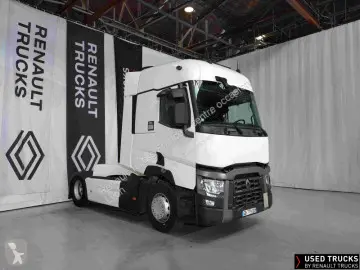
The Renault T-Series, introduced in 2013 as a successor to the Magnum and Premium ranges, quickly established itself as a serious contender in the heavy-duty tractor segment. Designed for long-distance haulage, the T-Series combines modern aerodynamics, driver comfort, and robust engineering. Over the years, it has become a common sight on European motorways, and its used market is vibrant, offering opportunities for cost-conscious fleets and owner-operators. This article provides an in-depth look at the Renault T-Series used tractor market, covering its history, key specifications, common variants, buying considerations, and market trends.
History and Evolution of the Renault T-Series
Renault Trucks, a subsidiary of the Volvo Group, launched the T-Series in 2013 to replace the aging Premium Long Distance and Magnum models. The T-Series was designed with a focus on fuel efficiency, driver comfort, and modularity. It features a distinctive high-roof cab with a flat floor, offering excellent living space for long-haul drivers. Over the years, the T-Series has received several updates, including the introduction of Euro 6 engines in 2014, improved aerodynamics, and enhanced safety systems. In 2021, the range was refreshed with a new grille design, updated interior, and additional driver assistance features. The T-Series is available in various configurations, including day cabs, sleeper cabs, and high-roof variants, with horsepower ratings ranging from 380 to 520 hp.
Key Specifications and Variants
The Renault T-Series is primarily powered by the DTI 11 or DTI 13 engines, developed in collaboration with Volvo. The DTI 11 is an 11-liter inline-6 producing 380, 430, or 460 hp, while the DTI 13 is a 13-liter engine offering 440, 480, or 520 hp. Both engines feature common-rail injection, turbocharging, and exhaust gas recirculation for Euro 6 compliance. Transmission options include the Optidriver automated manual transmission (AMT) with 12 speeds, as well as a manual ZF gearbox. Axle configurations are typically 4x2 or 6x2, with rear air suspension for improved ride quality and load distribution. The cab interior is designed for long-haul comfort, with a large windshield, adjustable steering wheel, and a well-appointed bed in sleeper versions. The T-Series also offers various infotainment systems, including a touchscreen with navigation and connectivity.
Market for Used Renault T-Series Tractors
The used market for Renault T-Series tractors is robust, with models from 2013 to 2023 available at varying price points. Typical examples with 400,000 to 700,000 kilometers can be found for between €30,000 and €60,000, depending on age, condition, and specification. Fleet-maintained units with full service history command higher prices, while ex-rental or ex-lease trucks may offer lower initial costs but require more thorough inspection. Popular configurations include the 4x2 high-roof with 460 hp and Optidriver transmission, ideal for general haulage. The T-Series has a reputation for reliability, but common issues include electrical problems (especially with the CAN-bus system), DPF clogging in early Euro 6 models, and clutch wear in manual examples. Buyers should also check for corrosion on the cab floor and door sills, a known weak point.
Advantages of Buying a Used Renault T-Series
One of the main attractions of the used T-Series is its excellent fuel efficiency, often matching or exceeding that of its Volvo FH sibling. The spacious cab offers superior driver comfort, with a low entry step and good storage. Parts availability is good, with Renault Trucks dealerships throughout Europe, and many parts are shared with Volvo trucks, reducing costs. The T-Series also benefits from a strong owner community and aftermarket support. For operators looking for a reliable and cost-effective long-haul tractor, the used T-Series represents strong value, especially compared to premium brands like Scania or Mercedes-Benz.
Buying Tips for Used Renault T-Series
When evaluating a used Renault T-Series, start with a full VIN check and service history. Inspect the engine for oil leaks and listen for unusual noises during a test drive. Check the transmission for smooth gear changes, especially in automated units. Examine the suspension and steering for wear. The cab interior should be free of water damage, and all electronic systems (air conditioning, infotainment, window regulators) should be tested. A pre-purchase inspection by a Renault Trucks specialist is highly recommended. Also, consider the truck's registration date: Euro 6 models from 2017 onwards have improved emissions systems. Finally, research the vehicle's previous usage – long-distance highway work is preferable to stop-start distribution.
Market Trends and Future Outlook
The used truck market in Europe has been volatile due to economic uncertainties, supply chain issues, and the transition to zero-emission vehicles. However, the Renault T-Series remains a popular choice because of its proven reliability and lower total cost of ownership. As new truck prices rise, demand for quality used units is expected to remain strong. Electric and hydrogen alternatives are emerging, but the T-Series diesel will continue to be a workhorse for years. Renult Trucks has announced plans to electrify its range, but the T-Series in its current form will likely be produced until at least 2025. This means a steady supply of used models will enter the market. For buyers, the current market offers opportunities to negotiate, especially for older Euro 5 models that may face restrictions in low-emission zones.
The Renault T-Series used tractor market provides a compelling option for freight operators seeking a balance of performance, comfort, and affordability. With careful selection and proper maintenance, a used T-Series can be a valuable asset for many years. Whether you're a fleet manager expanding operations or an owner-operator entering the industry, the T-Series deserves serious consideration. The key is to do thorough research, inspect diligently, and choose a truck that matches your operational needs. As the industry evolves, the diesel-powered T-Series will likely remain a common sight on roads, serving as a reliable backbone for European logistics.
Source: Europe-Camions.com News