

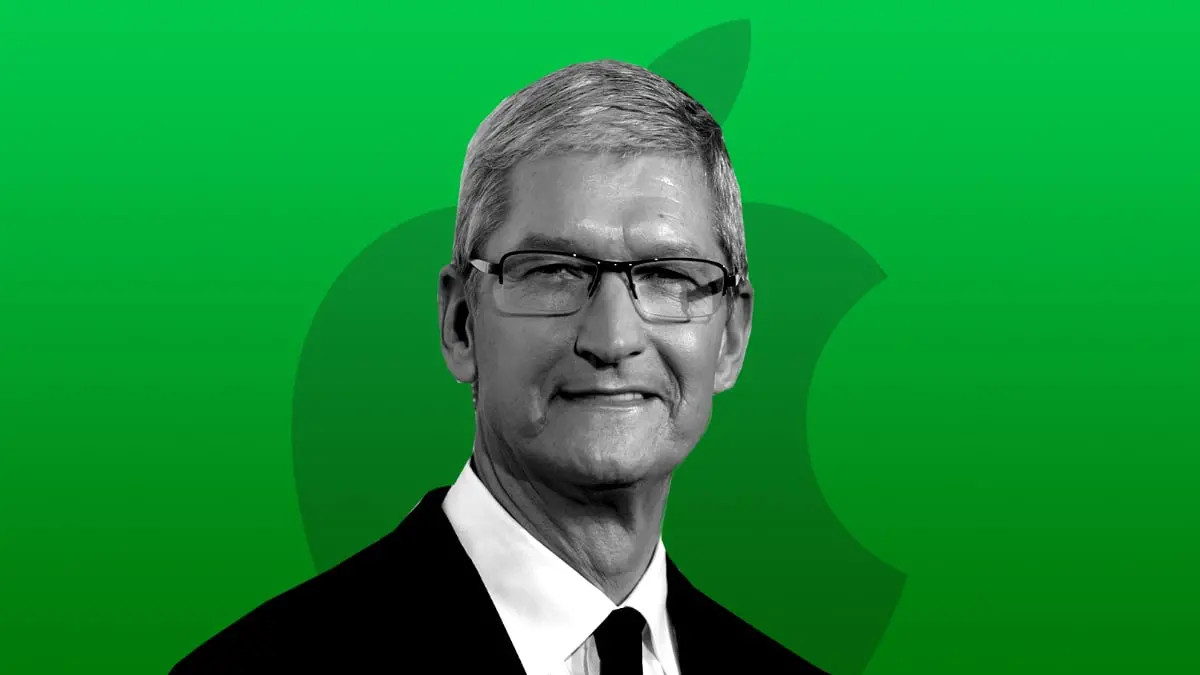
Apple has increased prices across its Mac and iPad lineups, a decision CEO Tim Cook described as reluctant but unavoidable. Speaking during the company's fiscal third-quarter 2026 earnings call, Cook attributed the move to an unprecedented spike in memory prices, calling it a “once-in-a-century” event that has forced Apple to adjust its pricing strategy.
Apple's quarterly results showed revenue of $109.4 billion, driven by strong demand for its latest devices. However, the company is grappling with rising component costs, particularly for DRAM and NAND memory, which have seen exponential price increases over the past several months. Cook emphasized that Apple does not take price hikes lightly, but the current market conditions left the company with little choice.
Price Hikes ‘Reluctantly’ Announced
During the earnings call, Tim Cook directly addressed the price increases that were implemented in June. “We have reluctantly raised prices,” Cook said. “We did it because we are facing what I would call a once-in-a-century flood on memory prices, with exponential increases.”
The price adjustments affect various Mac models and iPads, though Apple has not released a detailed breakdown of the changes. Analysts have noted that the increases are relatively modest compared to the magnitude of the memory cost surge, suggesting Apple is absorbing part of the impact to maintain customer demand. However, Cook made it clear that the company cannot fully insulate consumers from the broader market dynamics.
When asked about Apple's pricing philosophy, Cook explained that the company evaluates the entire business rather than focusing solely on margins or percentages. “We look at volumes, revenue, and margins, with a long-term vision,” he said. “We do not approach pricing as a purely mathematical calculation over 90 days.” This approach reflects Apple's commitment to protecting its ecosystem and customer loyalty, even in times of cost pressure.
Notably, Cook declined to comment on whether the upcoming iPhone 18 Pro and the first foldable iPhone, both expected to launch in September, would also see price increases. Several analysts anticipate that Apple will need to raise prices on its flagship smartphones to offset memory costs. However, the company is reportedly cautious about changing pricing for its iPhone lineup, which still accounts for roughly half of Apple's total revenue.
Supply Constraints Worsen
Looking ahead to the September quarter, Apple expects supply constraints to have a more pronounced impact on iPhone, iPad, and Mac availability. Cook was careful to clarify that the issue is not related to partners or suppliers failing to deliver. Instead, he pointed to demand that has far exceeded the company's initial forecasts.
“This is not a partner or supplier problem,” Cook explained. “It is a remarkably stronger-than-expected iPhone and Mac product cycle that has generated demand beyond our expectations.” The combination of robust demand and limited component availability has created a challenging environment for Apple's supply chain.
The company's supply chain flexibility is currently lower than usual, particularly for advanced semiconductor nodes used in Apple's custom chips. This is a significant concern given that Apple designs its own processors, including the A-series chips for iPhones and the M-series chips for Macs. Any disruption in the production of these critical components can have a cascading effect on the entire product lineup.
Apple is not alone in facing these challenges. The broader technology industry is dealing with a global memory shortage, driven by a combination of factors including increased demand for AI servers, data centers, and consumer electronics. Memory manufacturers have been slow to expand production capacity, and the lead times for new fabrication plants are typically several years. As a result, prices are expected to remain elevated for the foreseeable future.
Memory Costs Set to Rise Further
Apple's memory-related expenses have already increased in the June quarter compared to the March quarter, and the company anticipates even higher costs in September. The price surge affects both DRAM, which is used in devices for temporary data storage, and NAND flash memory, which provides long-term storage. The cost per gigabyte has risen dramatically in 2026, reversing years of steady declines.
To partially mitigate the impact, Apple is leveraging its existing inventory of components that were purchased at lower prices. However, this advantage will diminish over time as the company depletes its stock and is forced to procure memory at current market rates. Additionally, Apple is working to reduce costs on other components, such as display panels. Reports have indicated that Apple is negotiating OLED display prices for the iPhone 18 that are 20% lower than previous models, which could help offset some of the memory-related increases.
The memory market's structure is a major concern for Apple. The DRAM industry is dominated by just three major suppliers, which gives them significant pricing power. Cook acknowledged that Apple is evaluating “all options” to address the situation, though he did not provide specifics. Possible strategies include diversifying suppliers, increasing inventory levels, or even reshaping product specifications to use memory more efficiently.
The long-term outlook remains uncertain. Memory prices are projected to continue climbing beyond September, which could put additional pressure on Apple's margins. The company may need to make further pricing adjustments or find new ways to reduce costs in other areas of its supply chain. Historically, memory price cycles have been volatile, with periods of oversupply followed by sharp shortages. The current cycle appears to be one of the most severe in recent memory, exacerbated by the rapid growth of artificial intelligence technologies that require massive amounts of memory for training and inference.
A Leadership Transition at Apple
This earnings call was notably Tim Cook's last as CEO. John Ternus, Apple's head of hardware engineering, will assume the role of chief executive officer on September 1, while Cook will transition to the position of executive chairman. The leadership change marks the end of an era for Apple, which has been under Cook's stewardship since 2011.
During the call, Cook took a moment to thank shareholders, particularly those who have remained loyal over the years, as well as analysts who have covered the company. He expressed strong confidence in the transition and in Apple's future. “I have never been more optimistic,” Cook said, emphasizing his belief in the strength of Apple's leadership team and its product pipeline.
Cook had previously stated that he would remain executive chairman “for a long time” and that Apple would continue to be his priority. His ongoing involvement is likely to provide stability during the transition period. Ternus, who has been instrumental in the development of Apple's silicon and recent product innovations, is expected to maintain the company's strategic direction.
Apple is also facing external pressures, including regulatory scrutiny and geopolitical tensions. The U.S. government has reportedly asked Apple to avoid using Chinese memory chips, adding another layer of complexity to the company's supply chain strategy. Meanwhile, Apple is dealing with legal challenges over its App Store rules in the UK, and the European Union continues to enforce the Digital Markets Act, which requires Apple to open up its ecosystem to third-party developers and payment systems.
Despite these challenges, Apple's recent performance has been strong. The company's stock reached $338 per share, bringing its market capitalization close to $5 trillion. The demand for products such as the iPhone Air and the ongoing success of Apple's services division have helped offset concerns about hardware price increases. Apple has also expanded its services offerings, although recent price hikes for Apple Music, Apple One, iCloud+, and AppleCare+ have drawn criticism from some consumers.
As Apple prepares for a new chapter under John Ternus, the company faces the dual challenge of managing rising costs and maintaining its reputation for premium products. The memory shortage is unlikely to resolve quickly, and Apple will need to navigate a complex landscape of supply chain constraints, regulatory pressures, and evolving consumer expectations. Tim Cook's final earnings call highlighted the resilience of Apple's business model, even as the company adapts to a changing economic environment.
Source: iPhoneSoft.fr News