

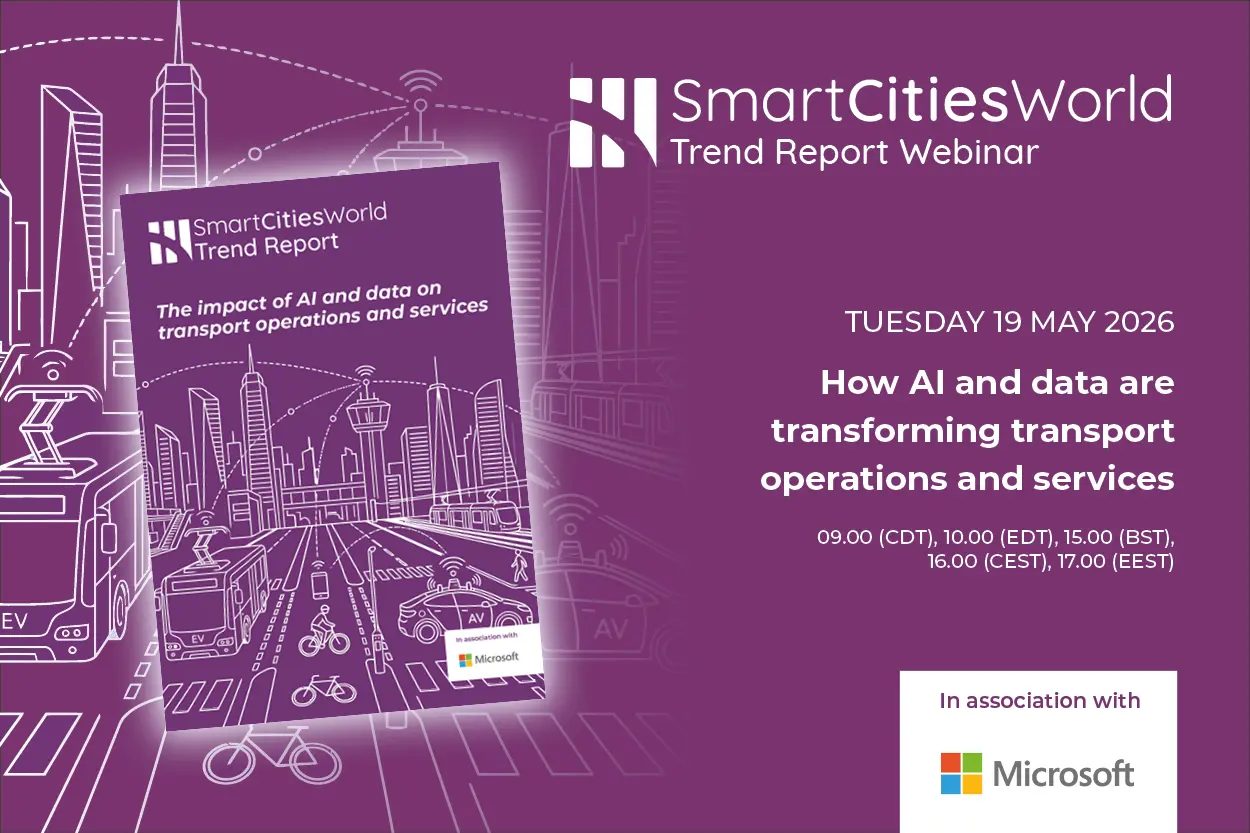
As transport agencies around the world turn to artificial intelligence (AI) and data-driven technologies to improve their services, a clear message is emerging: the most significant opportunities will not come solely from the algorithms themselves, but from the foundations on which they are built. Strong data infrastructure, workforce readiness, and responsible governance are becoming the decisive factors in whether smart mobility initiatives succeed or fall short.
This theme was central to a series of virtual panel discussions and on-demand webinars held as part of a major smart city summit in 2026. The events brought together urban planners, technology executives, academics, and local government leaders to explore how AI and data are beginning to transform the way cities operate and deliver services.
Infrastructure Resilience and the Shift to Risk-Based Strategies
One of the panel discussions focused on how cities can move towards a more strategic, risk-based approach to infrastructure resilience. Traditionally, many municipalities have responded to infrastructure failures after they occur, often under pressure and with limited time for planning. However, the panelists argued that by leveraging predictive analytics and real-time sensor data, cities can anticipate vulnerabilities and prioritize investments before problems escalate.
This shift requires a cultural change within public agencies. Instead of relying on historical inspection schedules, engineers and city officials are now being asked to think in terms of probability, consequence, and interdependencies. A risk-based approach considers not only the condition of a bridge, tunnel, or water main, but also the criticality of that asset to the community, the potential cascading effects of its failure, and the cost-benefit ratio of different mitigation strategies.
The discussion also highlighted the importance of data sharing across departmental boundaries. Without a unified view of infrastructure assets, risk models are incomplete. Cities that succeed in breaking down silos are better positioned to build comprehensive digital twins—virtual replicas of physical assets that allow for simulation and scenario testing.
Shaping Energy Systems Locally
Another panel explored how local authorities can shape their energy systems to become more sustainable and resilient. The focus was on renewable energy generation, flexibility services, storage solutions, and smarter networks. Panelists noted that cities are no longer passive consumers of electricity but are increasingly becoming active participants in the energy transition.
By developing local renewable projects such as solar arrays, wind turbines, and heat pumps, municipalities can reduce their carbon footprints and increase energy independence. Flexibility services, which allow large energy users to adjust their consumption during peak demand periods, are another tool that cities are using to balance the grid. Battery storage and electric vehicle batteries that can feed power back into the system provide additional layers of flexibility.
The panel emphasized that local authorities have significant regulatory and purchasing power to drive these changes. By setting ambitious sustainability targets, revising building codes, and deploying smart city sensors to monitor energy use, they can create a supportive environment for private investment and community participation.
Beyond Resilience: Regenerative Cities
Professor Lily Kong, President of Singapore Management University, offered a compelling vision for the future of urban environments. In her presentation, she argued that cities should move beyond the concept of resilience to become regenerative, restorative, and sensitive to the needs of their communities. Resilience, in her view, often implies a return to a previous state after a disruption. Regeneration, by contrast, seeks to improve the social, economic, and environmental conditions of a place over time.
Kong highlighted examples from around the world where urban regeneration projects have transformed formerly degraded areas into thriving community hubs. These projects often combine green infrastructure with affordable housing, public spaces, and cultural amenities. She also stressed the importance of listening to local residents and involving them in the co-creation of their environments. This requires not just new technologies but also new modes of civic engagement and participatory governance.
Connecting People, Data, and Investment
Throughout the summit, a coherent theme emerged: the future of cities will be defined by the ability to connect people, data, infrastructure, and investment into coherent, place-based strategies. This is particularly true for transportation, where digital technologies are blurring the lines between public and private mobility, physical and digital infrastructure, and land use and operational planning.
Data is the connective tissue. Open data platforms allow startups, academics, and government agencies to analyze travel patterns, optimize transit routes, and predict demand. Investment in digital infrastructure—such as fiber optic networks, 5G connectivity, and edge computing—is just as important as investment in roads, rails, and bridges. Without this foundation, AI applications remain theoretical.
Sunderland: A Model Smart City
A city profile presented during the summit showed how Sunderland is repositioning itself as a leading smart city. The northern UK city is using digital infrastructure and low-carbon innovation to build a resilient, future-focused economy. Highlights include the deployment of Internet of Things (IoT) sensors to monitor traffic, air quality, and energy usage, as well as the development of an urban observatory that aggregates data from multiple sources.
Sunderland’s approach demonstrates that smart city strategies do not have to begin with massive, high-profile projects. Sometimes the most effective starting point is a series of small, collaborative pilot programs that generate evidence and build trust. The city has also invested heavily in digital skills training to ensure that its workforce can take advantage of new opportunities in the technology sector.
Dublin: Innovating for Better Community Services
Dublin was also featured for its efforts to innovate across a range of city services. The Irish capital is using digital twin projects to simulate traffic flows and evaluate the potential impact of new developments before they are built. These models help planners reduce congestion, improve road safety, and prioritize investments in public transportation.
Dublin has also implemented traffic reduction measures such as active travel routes, expanded cycling infrastructure, and low-emission zones. These initiatives are supported by real-time data from cameras, sensors, and mobile applications, which allow city officials to monitor the network and adjust signal timing dynamically. Beyond transport, the city is using data analytics to enhance emergency response, waste collection, and community engagement.
Smart Lighting and Cybersecurity
Two episodes of a series on urban lighting focused on how global cities are approaching smart lighting and the related cybersecurity risks. Smart lighting systems can reduce energy consumption, improve public safety, and support a range of Internet of Things applications. However, they also introduce new vulnerabilities because every connected light point can become an entry point for a cyberattack.
The discussions explored the technology and considerations behind turning existing streetlight networks into secure, interoperable, and future-proof infrastructure. Key recommendations included using industry-standard protocols, encrypting data transmissions, and deploying patch management systems to address vulnerabilities. Cities were also advised to conduct regular security audits and to involve chief information security officers in the procurement and design process.
The Microsoft Perspective on AI and Transport
A particularly relevant contribution came from Katherine Flesh of Microsoft, who stated that as transport agencies turn to AI to improve services, the greatest opportunities will depend on strong data foundations, workforce readiness, and responsible governance. Flesh argued that AI models trained on incomplete, outdated, or biased data will produce unreliable results. Therefore, agencies must invest in data collection, cleaning, and validation before rolling out AI applications.
Workforce readiness is equally important. A successful AI strategy requires not only data scientists but also frontline staff who understand how to interpret and act on AI-generated insights. Flesh emphasized the need for cross-disciplinary teams and continuous training. Responsible governance, meanwhile, involves establishing clear frameworks for transparency, accountability, and bias mitigation. It also requires conducting equity assessments to ensure that AI applications do not disproportionately harm or exclude vulnerable communities.
Digital Twins and AI for Infrastructure Management
An on-demand panel discussion titled “Operating Smarter: Using Digital Twins and AI to Reshape Urban Infrastructure Management” explored how these technologies can be applied in practice. Digital twins are dynamic, data-driven virtual replicas of physical assets. By connecting them to live sensor data, city staff can monitor conditions in real time, simulate operational scenarios, and predict future performance.
The panelists highlighted several use cases, including predictive maintenance of roadways and bridges, optimization of waste collection routes, and improved management of water distribution networks. They noted that digital twins are most valuable when they are integrated with AI algorithms that can identify patterns and recommend actions. For example, an AI model might analyze vibration data from a bridge and alert engineers to a developing structural issue before it becomes visible to the human eye.
Preparing for AI: The Data Groundwork
A separate on-demand webinar examined the data groundwork needed for AI initiatives, with Sunderland serving as a case study. The webinar walked through the steps required to build a reliable urban data platform, including data acquisition, interoperability standards, privacy protection, and governance structures. Representatives from Sunderland discussed how they have worked with academic partners to create a dataset that is both secure and open to approved researchers.
One of the key takeaways was that data projects require long-term commitment. It can take months or even years to establish the necessary data-sharing agreements, quality controls, and metadata standards. But the payoff is significant: once these foundations are in place, subsequent AI applications can be deployed more quickly and with greater confidence.
Healthier, More Sustainable Cities
The summit also included contributions from Ecomondo, a major platform for sustainability professionals. Its representatives discussed the priorities shaping healthier, more sustainable cities and explained why events like the summit provide a valuable platform for sharing practical solutions and building professional connections. They stressed that cities are learning labs for sustainability, and that cross-sector collaboration is essential for scaling up successful experiments.
Across the various sessions, the consistently reinforced message was that AI and data are not ends in themselves, but tools to make cities more livable, equitable, and efficient. The best outcomes occur when these tools are embedded in broader strategies that account for the unique characteristics of each place and, above all, the needs of the people who live there. As transport operations and services continue to evolve, the cities that invest in their data foundations and in the skills of their workforce will be best positioned to harness the transformative power of AI.
"
Source: Smart Cities World News