

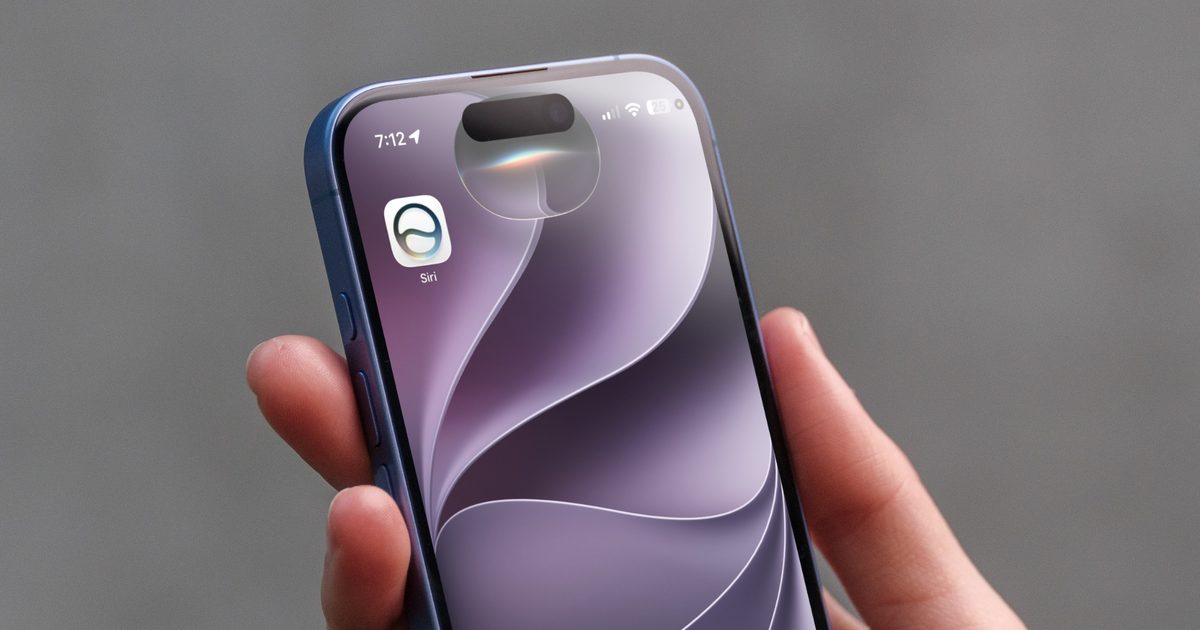
Apple’s latest earnings call was full of upbeat numbers: record iPhone revenue, a record June quarter, and plenty of excitement about Siri AI. But tucked inside the analyst Q&A was a detail that could reshape how people think about Apple’s artificial intelligence push. The company all but confirmed that heavy Siri AI users could eventually need a larger iCloud+ plan to keep using the feature comfortably. In other words, Siri AI may be free to start, but the more you depend on it, the more likely you will encounter a paywall.
Will heavy Siri AI users need to pay more?
During the earnings call, an analyst asked a pointed question: how does Apple plan to recover the compute costs behind Siri AI, especially since usage during the beta has apparently been strong? CEO Tim Cook did not deflect. He responded by saying Apple believes there will be people who want to use Siri AI extensively, and he confirmed the company will roll out “some kind of upgrade possibilities on iCloud+ where people can buy up the stack.” In plain terms, if you push Siri AI hard, Apple wants you on a higher iCloud+ tier to help cover the cost of powering that experience.
This was not a one-off comment either. Later in the call, when asked whether Siri AI would change Apple’s capital spending, Cook circled back to the same idea. He added that heavy usage gives people “the ability… to move up on an iCloud plan as well.” He also admitted that the balance between Apple absorbing those AI costs internally versus passing them along through iCloud+ upgrades is still “a bit uncertain at the moment.” That uncertainty suggests Apple is still figuring out the economics of generative AI on a platform used by over a billion people.
The underlying issue is simple: sophisticated AI features require massive computing infrastructure. Every time a user asks Siri AI to summarize an email, generate an image, or answer a complex question, Apple’s servers have to do real work. That work costs money, and those costs multiply quickly when millions of users are sending requests every day. Apple has historically avoided charging directly for core iPhone features, but AI is far more expensive to run than conventional software. Cloud-based AI models consume enormous amounts of processing power and electricity, and the cost per query can be significantly higher than a standard software transaction.
Apple is not the first company to confront this problem. OpenAI, Google, Microsoft, and others have all introduced subscription tiers for advanced AI tools, often reserving the best models and unlimited usage for paying customers. Apple’s approach may look different because it plans to tie AI access to iCloud+, a service many users already pay for. But the underlying business logic is similar: give users a taste of what AI can do, then charge for heavier use.
A precedent already exists
It is not as if Apple would be doing this for the first time. If you remember, the new AI features in the Apple Home app are restricted to the 2TB iCloud+ plan, which costs $9.99 per month. That means Apple has already established a pattern of linking advanced AI capabilities to higher storage tiers. Home AI features, which include intelligent scene recognition and enhanced automation suggestions, are not available to people on the free 5GB iCloud tier or even the 50GB and 200GB paid plans. Those users can still access basic Home functions, but the AI-powered additions are locked behind the most expensive individual iCloud+ option.
That precedent is important because it shows Apple is comfortable using iCloud+ not just as a storage service but as a distribution mechanism for premium features. iCloud+ already includes features like Private Relay, Hide My Email, and HomeKit Secure Video support, with different capacities available at different price points. The cheapest iCloud+ plan starts at $0.99 per month for 50GB, while the top-tier plans go up to 6TB and 12TB for families and power users. Apple could easily insert a new tier or add Siri AI access to existing plans, possibly at the 2TB level or higher.
The Home app restriction also offers a glimpse into Apple’s pricing philosophy. Rather than charging a separate monthly fee for AI, Apple seems to prefer bundling AI benefits into iCloud+ subscriptions. This has several advantages. For users who already pay for iCloud+, there is no mental hurdle because the cost is already part of a familiar subscription. For Apple, bundling increases the perceived value of iCloud+ and encourages users to upgrade their plans, generating more recurring revenue without introducing a separate AI subscription brand.
What does this mean for you?
Nothing is locked in yet. Apple has not announced usage caps, pricing tiers, or a timeline for any of this. But reading between the lines, it sounds like the free tier of Siri AI could come with some sort of ceiling. Once you hit that ceiling, Apple would love for you to upgrade your iCloud+ subscription to keep going. That could mean faster response times, priority access during peak hours, more requests per day, or access to more advanced AI models. It could also mean the difference between being able to generate a handful of images and being able to generate hundreds.
If you are already paying for iCloud+, this probably will not sting much. The 2TB plan is $9.99 per month, which is competitive with services like Google One and Microsoft 365. But if you were hoping Siri AI stays free and unlimited forever, that is not going to happen. Apple’s comments on the earnings call make that abundantly clear. The company is investing heavily in data center infrastructure, custom silicon, and AI research, and it needs a way to monetize that investment beyond simply selling more iPhones.
The bigger question is how Apple will define “heavy usage.” Will it be based on the number of queries per day, the complexity of tasks, the amount of data processed, or some combination of factors? Apple could implement soft limits that slow down response times for free users during peak hours while offering priority access to paid subscribers. It could also allow free users to access Siri AI only on-device, while cloud-based requests are reserved for paid plans. On-device processing is cheaper for Apple and more private for users, but it is also more limited in capability.
Apple’s history with iCloud storage suggests that the company understands the importance of a smooth upgrade path. When users exceed their free 5GB iCloud storage, Apple prompts them to upgrade to a paid plan. That same mechanism could be adapted for AI usage. If a user reaches their Siri AI limit, a dialog box could appear explaining that they have used their free allowance and inviting them to upgrade their iCloud+ plan. This would be a familiar pattern for iPhone users, and it would make the transition to paid usage feel natural rather than disruptive.
There is also the possibility that Apple will introduce a completely new tier within the iCloud+ lineup. Currently, iCloud+ starts at 50GB for individuals, then jumps to 200GB, 2TB, 6TB, and 12TB. The 2TB tier is the most popular among power users because it supports enhanced HomeKit features, large photo libraries, and device backups. Apple could add a 4TB tier or a premium AI tier that includes all existing iCloud+ benefits plus unlimited Siri AI access. Or it could follow the precedent of the Home app and simply make the most advanced Siri AI features available only to users on the 2TB plan or higher.
Another factor to consider is Apple One, the bundled subscription that combines iCloud+, Apple Music, Apple TV+, and Apple Arcade. Apple One Premier includes iCloud+ with 2TB storage, which would automatically qualify subscribers for the AI features tied to that tier. This bundling could drive more people toward Apple One, increasing overall subscription revenue and deepening customer loyalty to Apple’s ecosystem. It would also make it easier for families to share AI access through iCloud+ Family Sharing.
Privacy will also play a role. Apple has repeatedly emphasized that Siri AI is designed with privacy in mind, using on-device processing whenever possible and encrypting data that is sent to the cloud. If Apple starts charging for cloud-based AI features, it will need to reassure users that their data is still protected. Paid access must not come at the cost of privacy, and Apple will likely continue to promote its differential privacy and on-device processing as key selling points.
The competitive landscape will influence Apple’s decisions as well. Google has already integrated Gemini AI into Android and Google Workspace, offering free access to some features while charging for premium capabilities through Google AI Pro. Samsung has its own Galaxy AI, which was initially free but has begun showing signs that some features may eventually require a subscription. If competitors like Samsung start charging for AI, Apple may feel less pressure to keep Siri AI free. On the other hand, if a rival offers generous free AI access, Apple may need to tread carefully to avoid a backlash from users who expect AI to be included in the price of their premium devices.
For now, the safest assumption is that Siri AI will remain free at a basic level, but power users will eventually need to pay. That mirrors the broader industry trend toward subscription-based AI services, and it aligns with Apple’s growing emphasis on services revenue. The iPhone is still Apple’s biggest product, but services like iCloud+, Apple Music, and Apple TV+ have become crucial growth drivers. Adding AI features to iCloud+ gives Apple another way to grow that revenue stream without directly increasing the price of the iPhone.
In the short term, users who want to prepare for the upcoming changes should consider their current iCloud storage and usage habits. If you already rely heavily on iCloud for photo backups, device storage, and HomeKit accessories, you may already be on a paid tier. If you are still using the free 5GB plan, you will likely need to upgrade sooner or later, especially if you want to take full advantage of Siri AI. The good news is that iCloud+ is relatively affordable, and the entry-level paid plans are within reach for most iPhone owners.
Apple’s comments during the earnings call reveal a company that is excited about the potential of Siri AI but also realistic about its costs. Tim Cook’s repeated references to iCloud+ upgrades were not accidental. They were a signal to investors and users alike that Apple intends to make money from AI, not just treat it as a loss-leading feature. The exact pricing and structure are still being worked out, but the direction is clear: the free, unlimited Siri AI era is probably coming to an end.
Source: Digital Trends News